
Global Floating LNG boom brightens prospects for Nigeria’s multi-billion-dollar UTM Offshore project
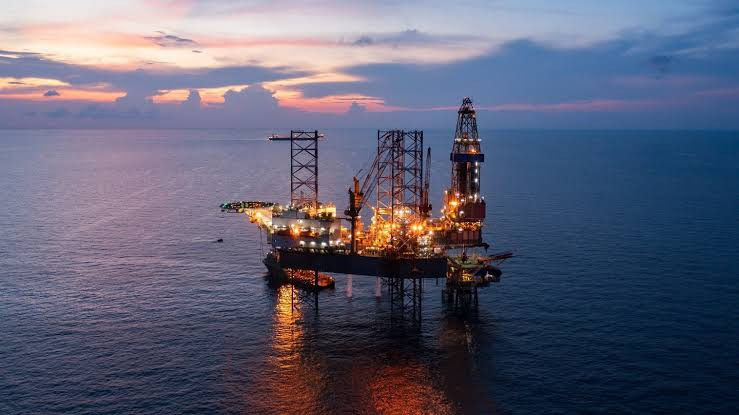
Nigeria’s planned multibillion dollar UTM Floating Liquefied Natural Gas (FLNG) project is poised to benefit from the rapid expansion of global floating LNG infrastructure as countries increasingly adopt offshore solutions to accelerate gas development and strengthen energy security.
The 2026 World LNG Report, published by the International Gas Union (IGU), shows that floating LNG infrastructure is becoming one of the fastest-growing segments of the global gas industry, driven by lower capital costs, shorter development timelines and greater operational flexibility.
The report stated that 12 floating and offshore LNG projects had reached Final Investment Decision (FID) by the end of 2025, representing 41.8 million tonnes per annum (Mtpa) of new regasification capacity expected to come on stream by 2030.
The development comes as Nigeria’s UTM Offshore recently secured a 15-year gas supply agreement with the joint venture between NNPC Limited and its partners, clearing one of the biggest hurdles to taking the Final Investment Decision, FID on the country’s first indigenous floating LNG project. The company is expected to take FID later this year.
Global momentum favours FLNG
According to the IGU report, the global LNG industry is increasingly embracing floating infrastructure because it enables countries to develop gas projects more quickly than conventional onshore facilities.
Unlike traditional LNG plants, which often require years of land acquisition, civil works and pipeline construction, floating facilities can be deployed offshore, reducing development costs and accelerating project execution.
The report noted that floating solutions have become particularly attractive for countries seeking to monetise stranded offshore gas resources while minimising upfront investment.
It stated: “Floating and offshore projects offer several structural advantages, including significantly shorter development timelines and lower upfront capital expenditure.”
Although the report focuses primarily on floating storage and regasification units (FSRUs), industry analysts say the same commercial drivers—lower costs, faster deployment and greater flexibility—are strengthening the investment case for floating liquefaction projects such as Nigeria’s UTM FLNG.
Analysts believe these advantages align closely with Nigeria’s vast offshore gas resources, much of which remain undeveloped despite the country possessing more than 200 trillion cubic feet (Tcf) of proven natural gas reserves.
Opportunity for Nigeria
For Nigeria, the UTM FLNG project represents far more than another LNG export facility.
Energy experts say it could provide a commercially viable solution for developing stranded offshore gas fields that have remained uneconomic under conventional onshore LNG projects.
The project is expected to produce approximately 2.8 million tonnes of LNG annually, alongside Liquefied Petroleum Gas (LPG) and condensate for domestic consumption and export.
It is designed to source gas from the Yoho offshore field under a long-term supply agreement.
Industry analysts believe successful delivery of the project would diversify Nigeria’s LNG export capacity beyond Nigeria LNG Limited (NLNG), whose Bonny Island complex has dominated the country’s LNG exports for more than two decades.
Rising investment in floating infrastructure
The IGU report noted that investment in floating LNG infrastructure continues to expand worldwide.
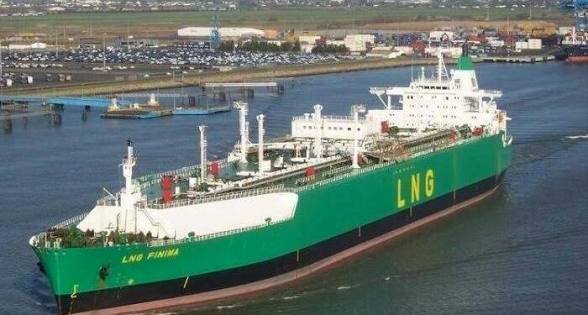
By the end of 2025, 55 floating and offshore regasification terminals were operational globally, with a combined capacity of 216.1 Mtpa, representing about 19.4 per cent of total global regasification capacity.
The report stated that “FSRUs are increasingly being adopted as the solution of choice in new and emerging markets.”
It added that nine floating and offshore regasification terminals were commissioned globally in 2025, adding 32.6 Mtpa of new capacity.
Africa recorded the largest increase, contributing 17.2 Mtpa, largely driven by Egypt, which commissioned three offshore LNG projects with an additional 14.9 Mtpa of capacity, while Senegal established its first LNG import infrastructure through an FSRU.
The report also noted that Europe continues to expand floating LNG infrastructure following disruptions to Russian pipeline gas supplies, while Latin America and the Middle East are also increasing investments in offshore gas infrastructure.
Why floating LNG matters
According to the IGU, the rapid growth of floating LNG infrastructure has been driven by technological advances and changing market needs.
The report noted that “the deployment of floating and offshore LNG receiving units has accelerated significantly, supported by advancements in LNG carrier and offshore regasification technologies.”
It added that “the expansion of LNG demand into emerging markets has made floating regasification terminals an attractive solution, supported by their operational flexibility, ability to be deployed quickly, and lower upfront capital investment compared to conventional onshore terminals.”
Industry experts say these same advantages make floating liquefaction projects increasingly attractive for gas-producing countries such as Nigeria.
For Nigeria, floating LNG technology offers several benefits, including eliminating the need for expensive onshore liquefaction plants, shortening construction timelines, lowering upfront capital investment, enabling gas to be processed closer to offshore production fields, accelerating the commercialisation of stranded gas resources and reducing many of the environmental and land acquisition challenges associated with onshore facilities.
Nigeria’s gas ambitions
The Federal Government has identified natural gas as Nigeria’s transition fuel under the Decade of Gas initiative.
Beyond expanding domestic gas utilisation, the government aims to increase LNG exports to capture rising global demand, particularly in Europe and Asia.
The UTM project is expected to complement NLNG’s operations while creating new opportunities for indigenous participation in the LNG industry.
It is also expected to generate thousands of construction and operational jobs, boost foreign exchange earnings and support government efforts to reduce routine gas flaring through the commercialisation of associated gas.
Need for urgent support
Analysts say the project’s success will depend on achieving a timely FID, securing adequate financing, maintaining a stable regulatory environment and ensuring continued support from government and industry stakeholders.
With global investment in floating LNG infrastructure gathering pace and demand for cleaner energy expected to remain robust over the coming decades, they believe Nigeria’s first indigenous FLNG project has the potential to strengthen the country’s position in the global LNG market, unlock significant value from its vast offshore gas resources and support the Federal Government’s drive to monetise its abundant natural gas reserves.