
COUNTDOWN: 141 Days Since the USA-Iran War Began
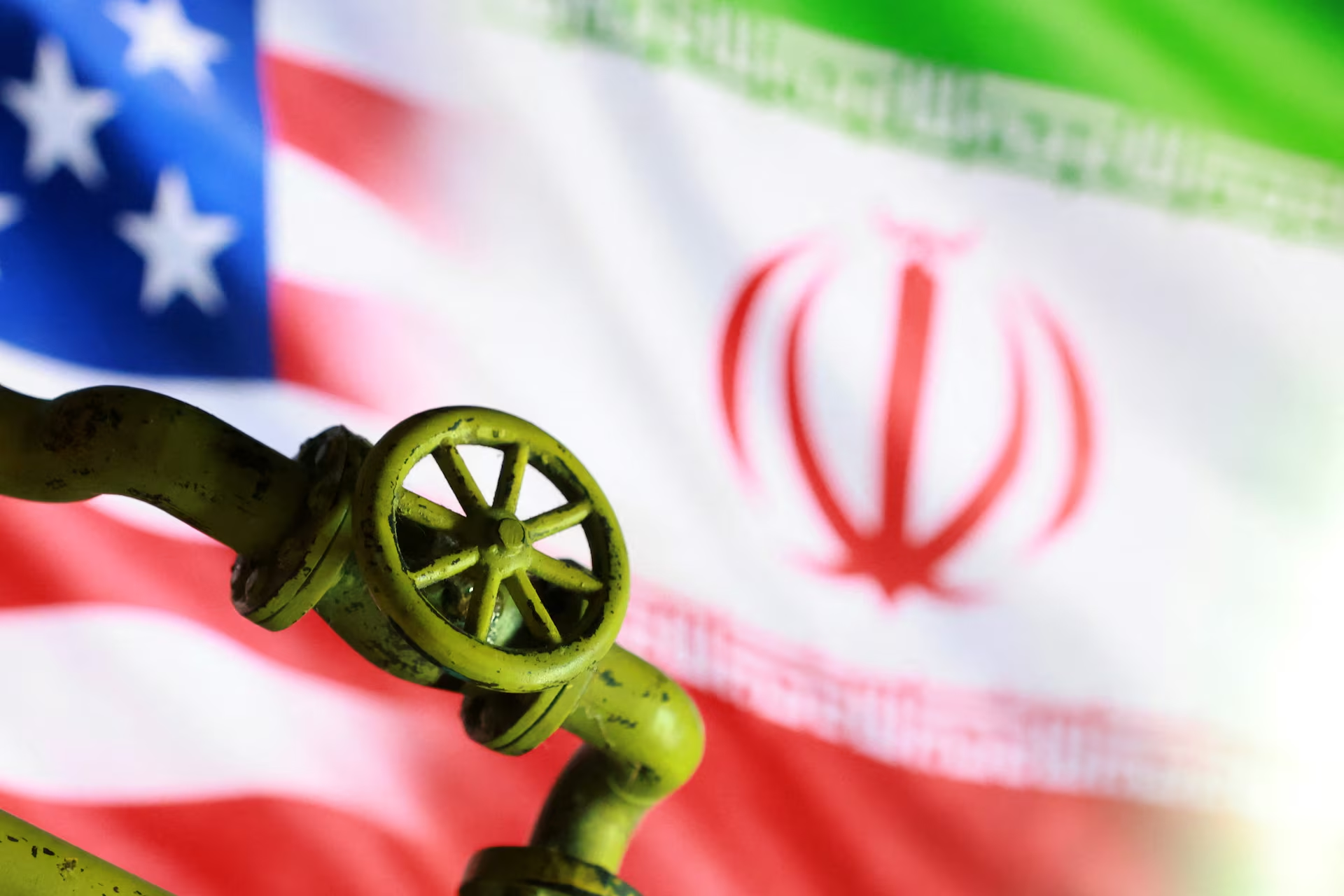
– Oil Market Cools as U.S.-Iran War Enters New Phase, Crude Prices Retreat
By Team Countdown
Global oil prices declined sharply on Monday as the oil market continued to adjust to the evolving U.S.-Iran conflict, with fears of immediate supply disruptions easing despite the prolonged geopolitical tensions in the Middle East.
Latest market data showed that major crude benchmarks posted significant losses, reflecting improving market confidence that oil supplies from the region will remain largely uninterrupted.
Brent crude, the international benchmark, fell by 4.84 per cent to $92.10 per barrel, while the U.S. benchmark, West Texas Intermediate (WTI), dropped 5.05 per cent to $84.80 per barrel. Murban crude also declined by 9.44 per cent to $97.05 per barrel.
The broader energy market followed the downward trend, with natural gas prices falling 2.58 per cent to $2.797, gasoline declining 3.15 per cent to $3.289, and heating oil easing 2.07 per cent to $4.094.
However, not all crude benchmarks moved in the same direction. The OPEC Basket gained 8.71 per cent to $102.80 per barrel, while the Indian Basket climbed 10.88 per cent to $103.30 per barrel, reflecting the different pricing structures and timing of contract settlements.
The latest market movement suggests that the initial panic buying that followed the outbreak of hostilities between the United States and Iran has gradually given way to a more measured assessment of geopolitical risks.
When the conflict intensified, traders feared possible disruptions to crude exports from the Persian Gulf, particularly through the Strait of Hormuz, a strategic waterway through which about one-fifth of the world’s oil supply passes daily.
Those concerns drove crude prices sharply higher as investors priced in a geopolitical risk premium.
However, despite continued military and diplomatic tensions, oil production and exports from major Gulf producers have remained largely unaffected, helping to calm market nerves.
Analysts said traders are increasingly focusing on actual supply fundamentals rather than geopolitical headlines.
Global crude inventories remain relatively adequate, while production from OPEC+, the United States and other major producers continues to provide sufficient supply to the market.
Demand-side concerns are also weighing on prices, as investors monitor slowing economic growth in several major consuming economies, which could limit oil consumption in the coming months.
For Nigeria, the decline in crude prices presents mixed implications.
Lower oil prices could reduce the country’s export earnings and place additional pressure on government revenues, given the economy’s heavy reliance on crude oil exports.
At the same time, declining international crude prices could provide some relief to petroleum product importers and domestic fuel marketers by reducing the cost of imported refined products if the trend persists.
The development may also support expectations of lower petrol prices in Nigeria, particularly if the softer crude market is sustained and freight costs remain stable.
Nevertheless, energy analysts warned that the oil market remains highly sensitive to developments in the Middle East.
Any escalation that threatens oil infrastructure or shipping routes could quickly reverse the current downward trend and send prices higher once again.
For now, however, the market appears to be signalling that the worst fears of a major supply disruption following the U.S.-Iran conflict have not materialised, allowing crude prices to retreat from the highs recorded at the height of geopolitical tensions.