
Why AEW named Dangote African Energy Person of the Year 2026
By Eyo Nsima
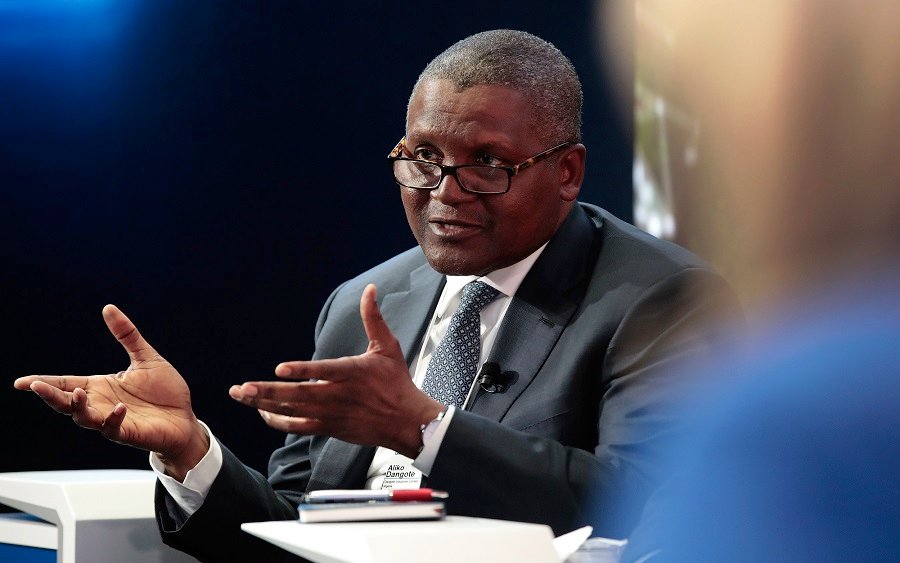
The African Energy Chamber has named Nigerian industrialist and President of Dangote Group, Aliko Dangote, African Energy Person of the Year 2026, recognising his role in expanding Africa’s refining capacity, reducing petroleum import dependence and building energy and industrial infrastructure.
The award, announced at African Energy Week (AEW) 2026, reflects Dangote’s growing influence on Nigeria’s energy landscape through the Dangote Petroleum Refinery, as well as his broader investments in manufacturing, logistics, fertiliser and petrochemicals.
The Chamber said the award celebrates individuals who advance “energy security, African development, energy additions, free markets, limited government, economic resilience, the prosperity of families, local content and improve African energy infrastructure.”
It described the honour as fitting for Dangote, whose investments, it said, have helped “strengthen energy security, build infrastructure, create jobs, reduce import dependence, support regional development, and promote African-led solutions to energy poverty.”
Refinery changes Nigeria’s energy equation
The biggest factor behind the recognition is the Dangote refinery in Lagos, which has emerged as one of Africa’s largest energy infrastructure projects.
The facility has increased its processing capacity from an initial 650,000 barrels per day (bpd) to about 700,000 bpd, producing petrol, diesel, aviation fuel and other petroleum products for domestic and international markets.
The Chamber said the refinery has “fundamentally altered” Nigeria’s longstanding dependence on imported refined products and created the capacity for the country to become a significant exporter.
It cited a fall in Nigeria’s seaborne petroleum-product imports from nearly 400,000 bpd in 2023 to less than 130,000 bpd in the second quarter of 2026. During the same quarter, exports to Europe reached about 130,000 bpd.
The development has also taken on greater strategic importance as geopolitical tensions disrupt global energy supply chains.
The Chamber said the refinery demonstrates that Africa can build and operate world-scale industrial infrastructure rather than remain primarily an importer of refined energy products.
From refinery to regional energy hub
Dangote’s ambitions do not end with the existing refinery.
He is advancing a reported $14.3 billion expansion programme that would increase processing capacity to 1.4 million bpd by 2029.
At that level, the expanded complex would strengthen Nigeria’s position as a major refining and petrochemical hub, with potential implications for petroleum-product supply across Africa.
The refinery has also entered Nigeria’s capital market. In September, Dangote launched an IPO involving 4.1 billion shares at N525 each, targeting about N2.15 trillion and broadening public ownership of the business.
For the Chamber, the significance of Dangote’s energy investments lies not only in their size but in their industrial impact.
It said Dangote has long recognised “one of Africa’s biggest economic challenges: the need among African countries to export raw materials and import finished products.”
His response has been to invest in “manufacturing capacity, logistics systems, energy infrastructure, raw material processing, and transportation networks” that keep more value within Africa.
Beyond the refinery
The Chamber also pointed to Dangote’s wider industrial investments in cement, fertiliser, petrochemicals, transportation and logistics as part of an effort to expand African production and technical capacity.
It said the refinery itself was delivered despite “financing challenges, infrastructure bottlenecks, technical complexity, political uncertainty and currency volatility.”
The Chamber described the facility as “a symbol of African industrial ambition and confidence.”
Dangote’s philanthropic activities through the Aliko Dangote Foundation also featured in the Chamber’s assessment, with programmes spanning health, nutrition, education, agriculture, poverty reduction and emergency relief.
Ultimately, AEW’s recognition reflects the scale of Dangote’s intervention in an energy sector where Africa continues to grapple with import dependence, inadequate refining capacity and limited industrial infrastructure.
As the Chamber put it, Dangote has invested his “time, resources, and unwavering belief in Africa’s potential to build industries, strengthen energy security, and create lasting economic opportunity across the continent.”
That, in the Chamber’s view, is what makes him its African Energy Person of the Year 2026.