

Minister Commends Waltersmith Refinery, NCDMB for Improving Domestic
Refining Capacity
The Minister of State for Petroleum (Oil), Senator Heineken Lokpobiri, has commended
Waltersmith Group and the Nigerian Content Development and Monitoring Board
(NCDMB) for supporting the Federal Government agenda of improving domestic
refining capacity.
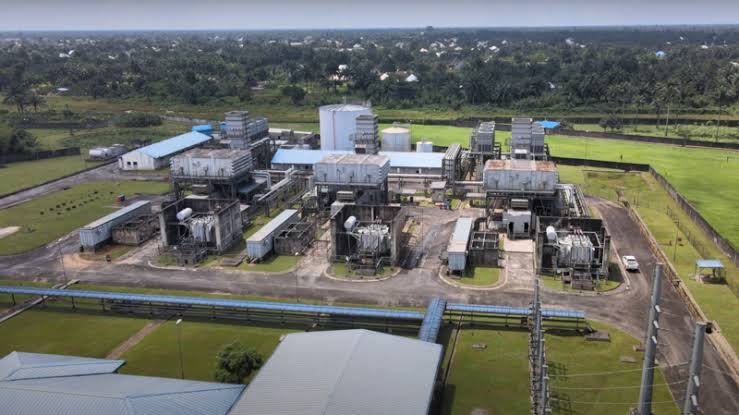
Speaking on Tuesday during a facility tour of Waltersmith Petroman Oil Limited, Ibigwe,
Ohaji-Egbema Local Government Area of Imo State, the Minister expressed his
satisfaction toward the company and NCDMB for taking the bull by the horn to
commence local refining of crude and partially meeting the demand of the local.
According to him, “The quickest way to fix our energy challenge in the country should be
through modular refineries, while we await the total rehabilitation of the big refineries.”
The 5,000-barrel per stream day Waltersmith Petroman, which has been a stable
source of diesel, kerosene, naphta, and high fuel oil to the domestic market since its
commissioning in 2020, was for him a proof of how beneficial such smaller processing
plants could be.
Lokpobiri expressed his commendation on the Board for taking up equity in Waltersmith
Refinery which quickly facilitated the completion of the modular refinery.
While commending Waltersmith Group, the Minister charged companies who have
been given the license for modular refineries and marginal field licenses to take cues
from Waltersmith and make deliberate investments.
In his words, “If you have a marginal field, an allocation, it is a paper given to you, it
doesn’t add value to you or to Nigeria, unless you take it to the next level by making the
requisite investment and then adding the value that is expected.”
“What I am seeing is that out of the numerous marginal fields that were allocated, only
Waltersmith and a few of them have been successfully driven,” he stated, recalling that
he had sounded a warning at the recent Nigeria Economic Summit Group (NESG) event
in Abuja that marginal field allocations without the requisite investments stand the risk of
being cancelled.
2
Explaining the imperative of such a line of action, he said, “It is important that we make
this point so that we can retrieve some of those fields to the basket,” so as to reallocate
such assets to those able and prepared to develop and exploit them to the benefit of the
industry and the nation.
He revealed that he had obtained presidential approval to conduct a fresh round of
bidding, which would take place soon, promising that “marginal fields would [henceforth]
be prioritised in terms of their location to those who have modular refineries, so that
they will be able to produce.”
Commending the remarkable success story of Waltersmith, whose Management has
announced plans for further expansion, he said, “I can assure you that this Government
will do whatever we can to support you so that you can continue to grow.” He had
similar words of praise for the Nigerian Content Development and Monitoring Board
(NCDMB), whose direct involvement through equity participation, greatly facilitated the
take-off and operations of the Refinery.
In his own remarks, the Executive Secretary of NCDMB, Engr. Simbi Kesiye Wabote,
said the decision of the Board to participate as equity holder in Waltersmith was
informed by its sense of mission and the impressive organisational arrangement within
the company.
According to him, NCDMB had no hesitation to partner with Waltersmith, “given the very
clear corporate governance that is required and exists within the company,” adding that
“part of our mandate is to enhance development and we see ourselves as catalysts for
the industrialisation of Nigeria.”
“At NCDMB, we are proud of what we have achieved here [at Waltersmith],” he
declared.
In an interview at the conclusion of the tour, the President and Group Chief Executive
Officer of Waltersmith Petroman Oil Limited, Mr. Abdulrasaq Isa, said part of the
expansion plans of the company is to raise the capacity of the processing plant from the
present 5,000 to 40,000 barrels per stream day, and to be able to produce two million
tonnes of petroleum products per annum.
The refinery has so far supplied a total of 600 million litres of petroleum products into
the Nigerian market since its commissioning in 2020.