
IEA warns Africa: Power, Digital Gaps Threaten AI Opportunities
African countries must accelerate investments in electricity and digital infrastructure to unlock the economic and energy benefits of artificial intelligence (AI), according to a new report by the International Energy Agency (IEA), which warns that inadequate power supply and poor internet connectivity could leave the continent behind in the global AI revolution.
In its report, “Energy and AI,” the IEA said AI is transforming economies worldwide through advances in computing power, data availability and machine learning, but noted that emerging markets, including many African countries, face significant barriers to adopting the technology.
According to the agency, “Unlocking AI’s potential in the energy sector of emerging market and developing economies requires careful co-ordination in building up energy and digital capacities.”
The report said while more than two-thirds of the world’s population lives in emerging market and developing economies outside China, these countries account for less than one-third of global electricity generation and less than 10 per cent of global data centre capacity.
This imbalance, the IEA noted, limits their ability to benefit from AI-driven innovation in energy, manufacturing and other sectors.
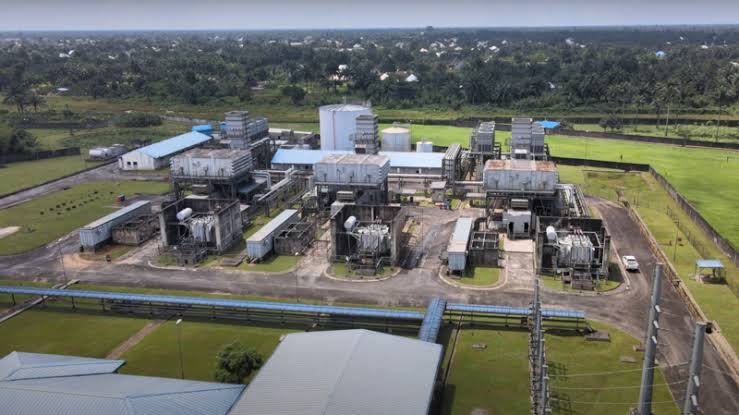
For African economies such as Nigeria, South Africa, Kenya, Egypt, Morocco and Ghana, the report suggests that expanding electricity generation, improving grid reliability and strengthening digital infrastructure will be critical to attracting AI-related investments.
The agency observed that AI has advanced rapidly in recent years because of breakthroughs in computing power, improved algorithms and the massive growth in digital data.
It noted that AI companies have become major drivers of global investment, with AI-related firms accounting for 65 per cent of the growth in the market capitalisation of S&P 500 companies between the launch of ChatGPT in November 2022 and the end of 2024.
The IEA also said AI-focused start-ups are attracting significantly higher valuations than traditional technology firms, reflecting growing investor confidence in the technology.
Opportunity for Africa’s energy sector
The report identified several areas where AI could transform Africa’s energy sector.
According to the IEA, AI can deliver faster and more accurate weather forecasting to improve the output of solar and wind power plants, optimise electricity transmission networks in real time and accelerate the discovery of advanced battery technologies needed for renewable energy storage.
These applications could help African countries improve electricity reliability, reduce operating costs and integrate more renewable energy into their power systems.
However, the agency warned that AI itself requires substantial amounts of electricity.
According to the report, “Globally, data centres consumed around 1.5% of electricity consumption in 2024.”
It noted that while conventional data centres typically consume between 10 and 25 megawatts (MW) of electricity, hyperscale AI data centres can require 100 MW or more, equivalent to the annual electricity consumption of approximately 100,000 households.
The IEA said the rapid growth of AI-focused data centres is increasing pressure on electricity networks, particularly in regions where they are concentrated.
Africa’s infrastructure gap
The report highlighted the significant digital divide facing many African countries.
According to the IEA, only around 60 per cent of people in emerging market and developing economies currently have reliable internet access, while households spend about ten times more of their income on data services than the global average.
The agency warned that these constraints make it difficult to deploy AI applications that depend on continuous data exchange, remote monitoring and advanced analytics.
It also identified unreliable electricity supply as a major obstacle to AI adoption.
According to the report, “Power reliability is an important barrier to address.”
The IEA noted that frequent power outages in many developing countries force businesses operating data centres to rely on expensive backup power systems, making overseas cloud hosting more attractive than local investment.
Balancing AI growth with electricity access
The agency also cautioned that governments must carefully manage the relationship between expanding AI infrastructure and improving electricity access.
According to the report, “In some Latin American and African countries, a stark contrast exists between large-scale data centre investments and everyday energy challenges.”
The IEA added that “In some such countries, it is not unusual for remote communities to experience severe power scarcity, even as new data centre investments intensify competition for local energy demand.”
It stressed that this reality “underscores the critical need for reliable, locally sourced electricity to bridge the digital and energy divides in emerging markets.”
For Nigeria and other African nations, the report suggests that achieving this balance will require coordinated investments in electricity generation, transmission infrastructure, broadband connectivity and digital skills.
The IEA concluded that while AI offers significant opportunities to modernise Africa’s energy sector, improve efficiency and accelerate economic growth, these benefits will only be realised if governments address long-standing infrastructure deficits and ensure that digital development is matched by reliable and affordable electricity supply.