
COUNTDOWN: 140 Days Since the USA-Iran War Began – Global Oil Market on Edge as Crude Prices Remain Volatile
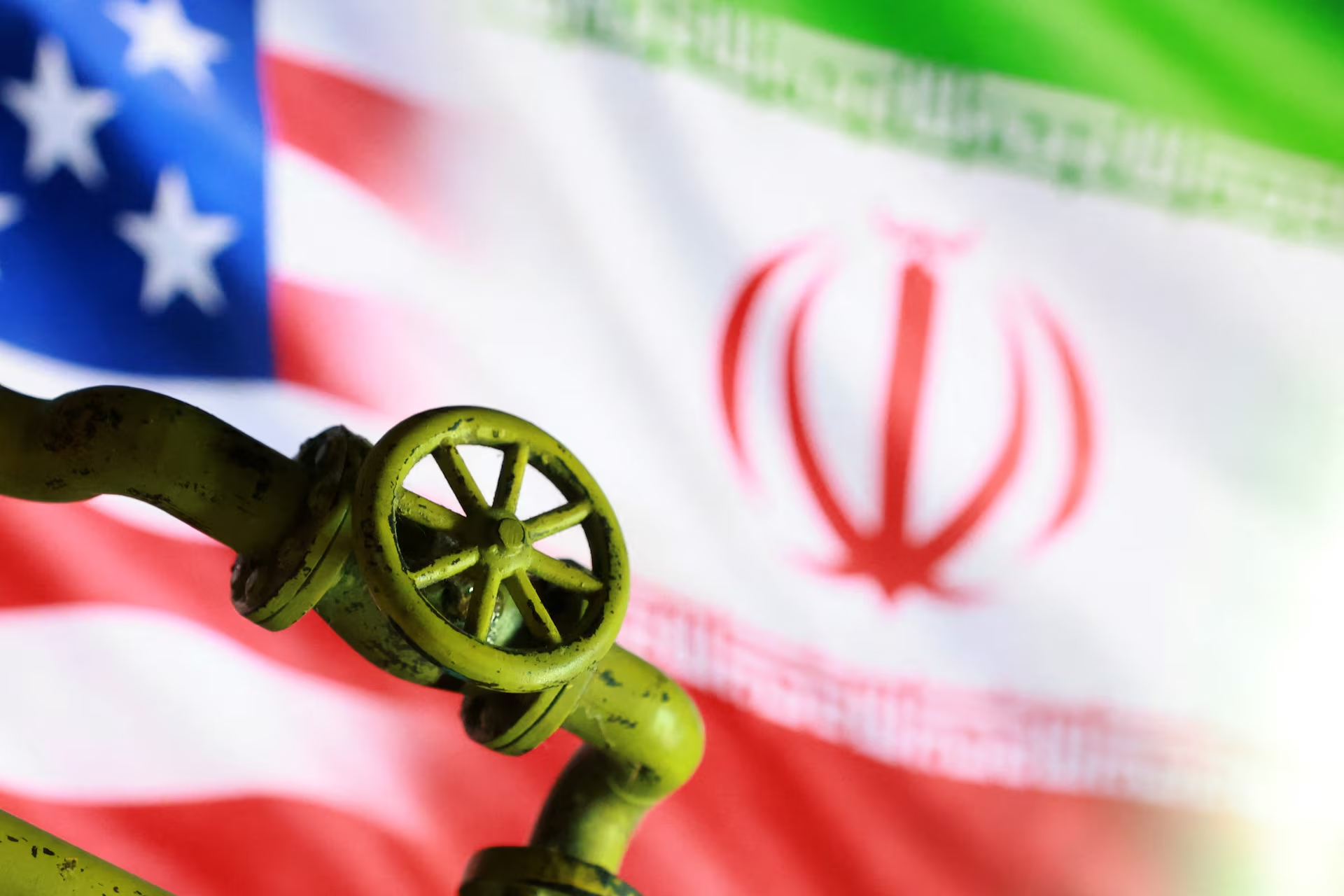
The global oil market remains under intense pressure as the prolonged conflict between the United States and Iran continues to reshape crude oil prices, fuel markets and energy security, even as benchmark prices retreated sharply in the latest trading session.
Market data showed that international crude benchmarks declined significantly, suggesting that traders are taking profits after weeks of war-driven price rallies while closely monitoring developments in the Middle East.
Brent crude, the international benchmark, fell by 3.88 per cent to $96.78 per barrel, while U.S. West Texas Intermediate (WTI) crude dropped 3.12 per cent to $89.31 per barrel. Murban crude also declined sharply by 9.44 per cent to $97.05 per barrel.
Similarly, refined petroleum products recorded losses, with gasoline prices falling 2.87 per cent to $3.396 per gallon, heating oil declining 3.71 per cent to $4.181, while natural gas eased 1.54 per cent to $2.871.
However, the OPEC Basket climbed to $102.80 per barrel, gaining 8.71 per cent, while the Indian Basket rose to $103.30 per barrel, reflecting the continued premium attached to crude grades largely supplied by producers in the Middle East.
Industry analysts said the contrasting price movements underscore the uncertainty dominating the market, where fears of supply disruptions continue to outweigh concerns over slowing global demand.
The conflict has elevated geopolitical risk premiums across oil markets since military hostilities escalated, raising fears that any disruption to production or shipping routes in the Persian Gulf could significantly tighten global supplies.
Although no prolonged closure of the Strait of Hormuz has occurred, markets remain highly sensitive because the strategic waterway handles roughly one-fifth of global oil shipments. Any threat to tanker movements immediately triggers higher prices and increased market volatility.
The latest decline in Brent and WTI prices reflects a combination of profit-taking by investors and growing confidence that immediate supply disruptions have not materialized on the scale initially feared.
Nevertheless, prices remain well above levels seen before the conflict intensified.
The sharp increase in the OPEC Basket price indicates that buyers continue paying a premium for crude grades from major Middle Eastern exporters amid persistent geopolitical uncertainty.
Inflationary pressures remain
Higher oil prices continue to feed inflationary pressures across many economies by increasing transportation, manufacturing and electricity costs.
Countries heavily dependent on imported petroleum products have experienced rising fuel bills, forcing governments to either absorb higher subsidy costs or allow domestic pump prices to rise.
Airlines, shipping companies and manufacturers have also faced higher operating costs, with many passing the additional expenses on to consumers.
Mixed outlook for producers
For oil-producing countries, the conflict has generated additional export revenue due to elevated crude prices.
Major exporters, particularly members of the Organization of the Petroleum Exporting Countries (OPEC), have benefited from stronger earnings despite increased market volatility.
However, sustained geopolitical instability also creates planning uncertainties for producers, refiners and investors, potentially delaying new investments in upstream projects.
Implications for Nigeria
For Nigeria, higher international crude prices present both opportunities and challenges.
On the positive side, stronger oil prices could boost government revenue, improve foreign exchange earnings and strengthen fiscal balances if production levels remain stable.
However, the country continues to face constraints from crude oil theft, pipeline vandalism and production below budget targets, limiting its ability to fully capitalize on elevated prices.
The domestic downstream sector also remains vulnerable. Higher international crude prices increase the cost of importing refined petroleum products and crude feedstock, potentially exerting upward pressure on local fuel prices despite increased refining capacity from the Dangote Petroleum Refinery.
Market outlook
Analysts expect oil prices to remain highly volatile as investors monitor military developments, diplomatic efforts and shipping activity in the Gulf region.
Any escalation capable of disrupting exports from major Middle Eastern producers could send Brent crude back above the $100-per-barrel mark, while signs of de-escalation may trigger further price corrections.
For now, the global oil market remains caught between resilient supply fundamentals and persistent geopolitical risks, ensuring that price swings will continue to dominate energy markets in the weeks ahead.