
Ayuk urges government to fast-track Trident Energy’s proposed project
New facility could unlock offshore gas, generate foreign exchange, create jobs
By Eyo Nsima
The Republic of Congo is seeking to expand its Liquefied Natural Gas (LNG) export capacity through a proposed third Floating Liquefied Natural Gas (FLNG) vessel, as the country intensifies efforts to monetise its offshore gas resources and attract fresh investments.
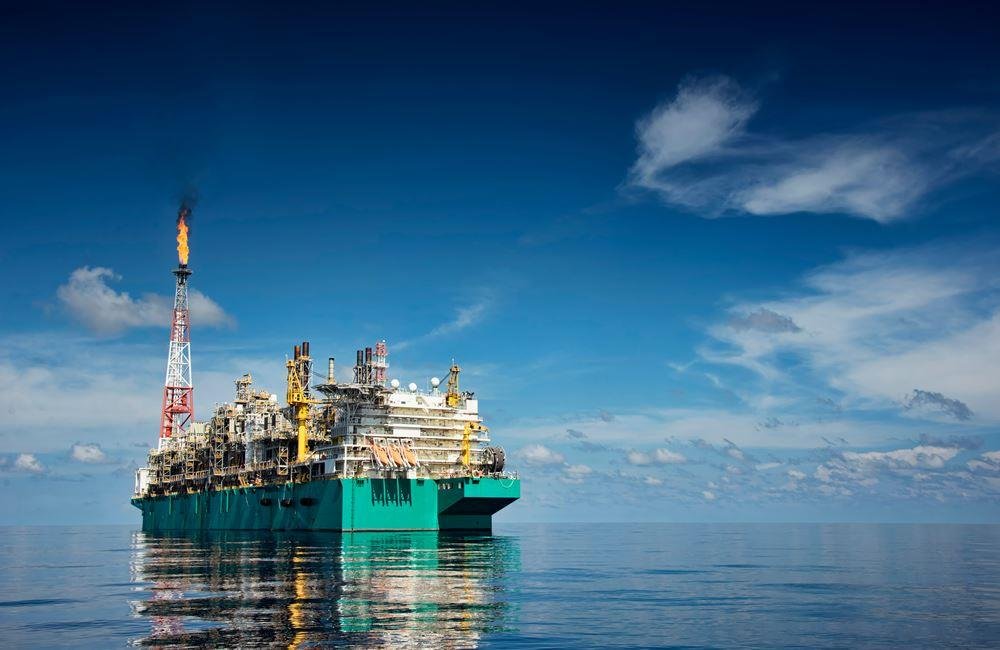
FLNG facility. File photo.
The proposed facility, being promoted as part of Trident Energy‘s gas development plans, is expected to provide additional processing and export capacity, enabling the country to commercialise more associated gas from its offshore petroleum fields.
Executive Chairman of the African Energy Chamber (AEC), NJ Ayuk, who advocated the project, urged the Congolese government to fast-track the necessary regulatory approvals, arguing that delays could undermine investment opportunities and limit the country’s ability to benefit from growing international demand for LNG.
In a statement published on his LinkedIn page, Ayuk said a third FLNG vessel could build on the success of existing floating LNG facilities operated by Eni in the country.
“Eni proved the modular blueprint on Marine XII with roughly $4 billion to $5 billion invested across two phases, scaling Congo LNG from 0.6 mtpa on Tango to 3.0 mtpa (4.5 bcm/year) once Nguya came online in just 33 months,” he said.
According to him, deploying another floating LNG vessel would offer a relatively faster route to monetising offshore gas compared with developing conventional onshore LNG infrastructure.
He explained that the proposed facility could serve Trident Energy’s 1,160-square-kilometre acreage and neighbouring offshore blocks, providing shared gas processing and export infrastructure for operators in the Lower Congo Basin.
“A third, FLNG vessel operating as shared basin infrastructure across Trident’s 1,160 km² acreage and neighbouring blocks avoids multi-billion-dollar onshore greenfield delays and turns stranded molecules into immediate foreign exchange, royalties, and tax revenue,” Ayuk stated.
He noted that improved gas handling and processing capacity would also help address production constraints in offshore oil fields, where associated gas management can affect crude oil output.
Ayuk specifically identified the Moho field, operated by TotalEnergies, where he said gas handling constraints could limit production despite additional investment and discoveries.
“At Moho where TotalEnergies produce roughly 90,000 boe/d, and where it has committed $600 million to Moho Nord alongside new Moho F and G discoveries, gas handling caps crude output,” he said.
He argued that a shared FLNG solution could reduce routine gas flaring, ease gas reinjection bottlenecks and support the recovery of additional crude oil.
“A shared FLNG off-take solution eliminates routine flaring, removes gas-reinjection bottlenecks, and allows both companies to open up the chokes and recover millions of additional barrels of high-value crude,” he added.
Beyond expanding LNG exports, Ayuk said the proposed investment could generate employment, strengthen local content development and create business opportunities for Congolese service companies.
He maintained that the project would support offshore engineering activities, technical training and the participation of domestic companies in the country’s expanding oil and gas industry.
The AEC chairman also highlighted the importance of timely regulatory decisions, warning that Congo could lose investment opportunities to competing LNG-producing countries if project approvals are delayed.
“Global demand for LNG remains tight as buyers seek reliable supply free of maritime chokepoints. Every month spent waiting on paperwork is capital and market share ceded to competing basins,” he said.
He further cited Trident Energy’s existing operations in Congo, including its reported supply of the country’s domestic LPG requirements, as evidence of its contribution to the local energy market.
Congo’s LNG development has gained momentum through Eni’s Tango and Nguya floating facilities, which have expanded the country’s capacity to process and export natural gas.
The proposed third vessel would build on this infrastructure, potentially strengthening Congo’s position in the international LNG market while creating additional opportunities to monetise its offshore gas resources.
However, the proposed Trident Energy project still requires the necessary regulatory approvals, with its investment cost, processing capacity and implementation timetable yet to be established in the information provided by the company or government.
Ayuk urged the government to accelerate the approval process, insisting that the country must move quickly to translate its substantial hydrocarbon resources into economic growth, investment and improved energy access.