

By Eyo Nsima
Domestic refineries received 179.31 million barrels of crude oil between January and October 2026, with locally produced crude accounting for 80.9 per cent of total supply, while imported cargoes represented the remaining 19.1 per cent.
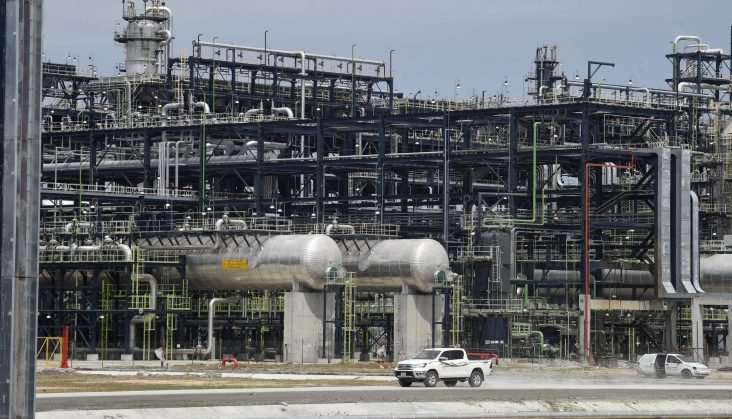
The Nigerian Midstream and Downstream Petroleum Regulatory Authority (NMDPRA), which disclosed this in its October 2026 factsheet, said domestic refineries received 144.98 million barrels of locally produced crude during the 10-month period, compared with 34.33 million barrels of imported crude.
The report showed that crude oil receipts by domestic refineries increased to 22.80 million barrels in October, the highest monthly volume recorded between January and October 2026.
The development highlights the growing contribution of domestic crude production to Nigeria’s refining industry, although the continued importation of crude by local refineries underscores the challenges associated with securing adequate feedstock locally.
According to the NMDPRA, crude oil receipts by domestic refineries rose by 19 per cent to an average of 736,000 barrels per day in October, from 617,000 barrels per day in September.
The regulator stated that imported crude supplied to Dangote Petroleum Refinery increased by 39 per cent to 118,400 barrels per day in October, compared with the preceding month.
Consequently, the local crude share of Dangote Refinery’s supply declined to 83.9 per cent in October from 86.1 per cent in September.
The Authority stated: “Crude oil receipts by domestic refineries rose 19 per cent to 0.736 million barrels per day (September: 0.617 million barrels per day). Imported crude to Dangote grew 39 per cent to 118.4 thousand barrels per day, lowering the local crude share to 83.9 per cent from 86.1 per cent.”
The figures indicate that although locally produced crude remained the dominant feedstock for domestic refineries, imported supplies continued to play an important role in supporting refining operations.
Further analysis of Dangote Refinery’s October performance showed that its crude receipts exceeded its crude processing volume by approximately 48,000 barrels per day, reversing September’s reported drawdown of 71,000 barrels per day.
The NMDPRA explained that the October development reflected an increase in crude receipts relative to crude runs.
Meanwhile, the refinery recorded average capacity utilisation of 103.73 per cent in October, compared with 105.98 per cent in September, based on its installed capacity of 650,000 barrels per day.
The refinery produced an average of 48.51 million litres of petrol, 25.14 million litres of diesel and 26.44 million litres of aviation fuel daily during the period.
However, Nigeria’s three state-owned refineries in Port Harcourt, Warri and Kaduna remained shut, recording no production in October.
The performance of modular refineries also remained mixed. WalterSmith operated at 58.10 per cent capacity utilisation, Edo Refinery at 114.89 per cent, Aradel at 30.93 per cent and OPAC at 24.86 per cent, while Duport Refinery was shut down.
The NMDPRA said modular refineries supplied an average of 680,000 litres of diesel daily in October, compared with 620,000 litres in September.
The latest figures underline the importance of sustained crude supply to domestic refineries as Nigeria seeks to strengthen local refining capacity, reduce dependence on imported petroleum products and improve energy security.