
Cheap Fuel Imports Lure Oil Traders from Dangote Petroleum Refinery, Choke Apapa-Kirikiri
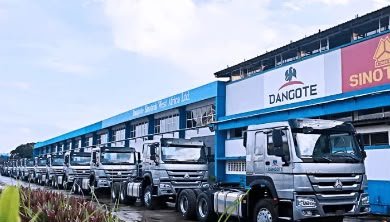
Dangote’s N720bn CNG Truck Investment to Save Nigerians N1.7trn Annually ...To Lift 42 Million MSMEs ...Presidency, IPMAN, Experts Hail Bold Move Dangote Petroleum Refinery has announced a landmark investment of over ₦720 billion in the deployment of 4,000 Compressed Natural Gas (CNG)-powered trucks for nationwide distribution of petroleum products. This initiative is projected to save Nigerians more than ₦1.7 trillion annually in logistics and fuel distribution costs. The privately-owned refinery is set to absorb over ₦1.07 trillion each year in fuel distribution expenses, drastically reducing operational costs for over 42 million Micro, Small, and Medium Enterprises (MSMEs). The move is expected to lower pump prices, reduce inflation, and increase profitability for businesses across Nigeria. Starting August 15, Dangote will begin direct delivery of petrol and diesel to filling stations, industrial sites, and other high-volume consumers. This eliminates intermediaries and transportation bottlenecks, a move that experts say could transform the energy supply chain. According to the refinery, its production capacity will meet Nigeria’s daily consumption of 65 million litres of refined petroleum products — including 45 million litres of PMS, 15 million litres of diesel, and 5 million litres of aviation fuel. With logistics costs averaging ₦45 per litre, the cost-saving impact of free distribution is estimated at ₦1.07 trillion annually. The investment includes not only the CNG trucks but also a network of nationwide ‘mother and daughter’ CNG stations and related infrastructure. A Strategic Shift for Nigeria’s Economy Dangote Group’s intervention aligns with its broader commitment to: Eliminate logistics inefficiencies Promote energy sustainability Support MSME growth Revive dormant filling stations and stimulate job creation The initiative is expected to create over 15,000 direct jobs within the logistics chain — including drivers, station managers, and CNG station attendants. Additionally, the direct-to-retail delivery system is set to curb petroleum product smuggling, ensuring a more secure and environmentally friendly distribution framework. Presidential and Industry Endorsements The Presidency has praised the initiative as a pivotal step in transitioning Nigeria toward gas-powered transportation. Tosin Coker, Commercial Coordinator of the Presidential CNG Initiative (PCNGI), called it a “milestone achievement,” highlighting the scale and strategic value of the move. “It signals that CNG is no longer a distant goal but a practical, current solution,” he stated. Similarly, the Independent Petroleum Marketers Association of Nigeria (IPMAN) welcomed the development. According to Chinedu Ukadike, National Publicity Secretary, the initiative addresses a long-standing challenge in Nigeria’s downstream sector: “For years, we've relied on costly transport from coastal depots due to non-functional pipelines. Dangote’s direct delivery will ease this burden immensely.” Expert Reactions Prof. Ken Ife, a development economist, noted that the initiative would help bring down the price of PMS, with ripple effects on other sectors. Bismarck Rewane, CEO of Financial Derivatives Company, dismissed monopoly fears, instead applauding the elimination of middlemen and the provision of credit facilities at the retail level. “Middlemen extract margins without adding value. Dangote is investing, distributing, and offering credit — a game-changer,” Rewane remarked. Kelvin Emmanuel, energy expert and co-founder of Dairy Hills, described the absorption of logistics costs as a turning point that would allow citizens to truly benefit from local refining. Ibukun Phillips, an energy analyst, called the move revolutionary, especially in its potential to improve access and affordability in rural communities: “Rural consumers stand to benefit greatly. This could revive abandoned filling stations and ensure fairer, more equitable distribution.”
Dangote’s N720bn CNG Truck Investment to Save Nigerians N1.7trn Annually …To Lift 42 Million MSMEs …Presidency, IPMAN, Experts Hail Bold Move Dangote Petroleum Refinery has announced a landmark investment of over ₦720 billion in the deployment of 4,000 Compressed Natural Gas (CNG)-powered trucks for nationwide distribution of petroleum products. This initiative is projected to save Nigerians more than ₦1.7 trillion annually in logistics and fuel distribution costs. The privately-owned refinery is set to absorb over ₦1.07 trillion each year in fuel distribution expenses, drastically reducing operational costs for over 42 million Micro, Small, and Medium Enterprises (MSMEs). The move is expected to lower pump prices, reduce inflation, and increase profitability for businesses across Nigeria. Starting August 15, Dangote will begin direct delivery of petrol and diesel to filling stations, industrial sites, and other high-volume consumers. This eliminates intermediaries and transportation bottlenecks, a move that experts say could transform the energy supply chain. According to the refinery, its production capacity will meet Nigeria’s daily consumption of 65 million litres of refined petroleum products — including 45 million litres of PMS, 15 million litres of diesel, and 5 million litres of aviation fuel. With logistics costs averaging ₦45 per litre, the cost-saving impact of free distribution is estimated at ₦1.07 trillion annually. The investment includes not only the CNG trucks but also a network of nationwide ‘mother and daughter’ CNG stations and related infrastructure. A Strategic Shift for Nigeria’s Economy Dangote Group’s intervention aligns with its broader commitment to: Eliminate logistics inefficiencies Promote energy sustainability Support MSME growth Revive dormant filling stations and stimulate job creation The initiative is expected to create over 15,000 direct jobs within the logistics chain — including drivers, station managers, and CNG station attendants. Additionally, the direct-to-retail delivery system is set to curb petroleum product smuggling, ensuring a more secure and environmentally friendly distribution framework. Presidential and Industry Endorsements The Presidency has praised the initiative as a pivotal step in transitioning Nigeria toward gas-powered transportation. Tosin Coker, Commercial Coordinator of the Presidential CNG Initiative (PCNGI), called it a “milestone achievement,” highlighting the scale and strategic value of the move. “It signals that CNG is no longer a distant goal but a practical, current solution,” he stated. Similarly, the Independent Petroleum Marketers Association of Nigeria (IPMAN) welcomed the development. According to Chinedu Ukadike, National Publicity Secretary, the initiative addresses a long-standing challenge in Nigeria’s downstream sector: “For years, we’ve relied on costly transport from coastal depots due to non-functional pipelines. Dangote’s direct delivery will ease this burden immensely.” Expert Reactions Prof. Ken Ife, a development economist, noted that the initiative would help bring down the price of PMS, with ripple effects on other sectors. Bismarck Rewane, CEO of Financial Derivatives Company, dismissed monopoly fears, instead applauding the elimination of middlemen and the provision of credit facilities at the retail level. “Middlemen extract margins without adding value. Dangote is investing, distributing, and offering credit — a game-changer,” Rewane remarked. Kelvin Emmanuel, energy expert and co-founder of Dairy Hills, described the absorption of logistics costs as a turning point that would allow citizens to truly benefit from local refining. Ibukun Phillips, an energy analyst, called the move revolutionary, especially in its potential to improve access and affordability in rural communities: “Rural consumers stand to benefit greatly. This could revive abandoned filling stations and ensure fairer, more equitable distribution.”
– By Alison Godswill

Kindly Share

Facebook
Twitter
LinkedIn
WhatsApp

Cheap Fuel Imports Lure Oil Traders from Dangote Petroleum Refinery, Choke Apapa-Kirikiri


The arrival of cheaper imported petroleum products has triggered a major shift in Nigeria’s downstream oil market, with many marketers abandoning the Dangote Petroleum Refinery in favour of imported fuel, a development that is worsening tanker traffic and gridlock along the Apapa-Kirikiri corridor in Lagos.

Findings by Vanguard showed that many owners of oil depots have embarked on massive importation of Premium Motor Spirit (PMS), popularly known as petrol, and Automotive Gas Oil (AGO), or diesel, for the third quarter (July–September) 2026 after obtaining import licences from the Nigerian Midstream and Downstream Petroleum Regulatory Authority (NMDPRA).

Before the latest wave of imports, many marketers relied heavily on the Dangote Petroleum Refinery for product supplies and distribution across Nigeria.

Industry sources said the renewed importation became possible following the issuance of import licences to Matrix Energy, AA Rano, AYM Shafa, Bono Energy, Nipco Plc and Pinnacle Oil & Gas.

According to the NMDPRA, the approvals are intended to ensure market stability and prevent possible supply disruptions amid declining stock levels and reduced gasoline output from Nigeria’s largest refinery.

It was gathered that AA Rano, AYM Shafa, Bono Energy, Matrix Energy, Nipco Plc and Pinnacle Oil & Gas were authorised to import petrol, while AA Rano, AYM Shafa, Bono Energy, Matrix Energy and Pinnacle Oil & Gas also received approval to import diesel.

Under the allocation, AA Rano and Matrix Energy each received approval to import 180,000 metric tonnes of petrol, while Pinnacle Oil & Gas was allocated 150,000 metric tonnes and AYM Shafa 120,000 metric tonnes.
For diesel, AYM Shafa received approval to import 60,000 metric tonnes, while Pinnacle Oil & Gas was cleared to import 45,000 metric tonnes.

Industry operators said the influx of imported products has shifted lifting activities from the Dangote Petroleum Refinery to tank farms located in Apapa and Kirikiri, resulting in a sharp increase in the number of petroleum tankers converging on the area daily.

The development, they said, has compounded traffic congestion on major roads leading to the nation’s busiest petroleum distribution hub.

A tanker owner, who spoke on condition of anonymity, said marketers were being driven primarily by price.

“As I speak, imported petroleum products have become cheaper than locally refined products. That is the major reason marketers have shifted their patronage to fuel importers.

“We will continue to buy imported fuel because of the cost advantage. We save between N2 and N3 per litre by purchasing imported petroleum products. When you buy in commercial quantities, the savings run into millions, and in some cases, billions of naira.”

Another depot operator said the market has become increasingly price-sensitive since deregulation.

He said: “Nobody is loyal to any refinery. Marketers will always buy from whoever offers the lowest price. At the moment, imported products are more competitive, so naturally many traders have moved away from Dangote.”

Kindly Share

Facebook
Twitter
LinkedIn
WhatsApp

Copyright @ TheDaily. All rights reserved. This material, and other digital content on this website, may not be reproduced, published, broadcast, rewritten or redistributed in whole or in part without prior express written permission from TheDaily

Leave a Comment

Your email address will not be published. Required fields are marked *

📰 Subscribe to our Newsletter

Scroll to Top