
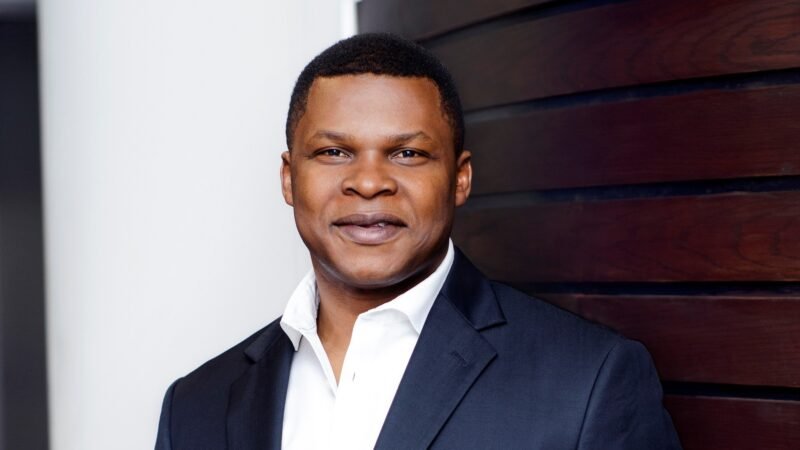
Venezuela’s Oil Sector at Turning Point as Reforms Lure Global Investors — Ayuk
By Eyo Nsima
Venezuela’s oil and gas industry is at a major turning point as the government moves to reform the sector, attract international investment and unlock its vast hydrocarbon resources, according to NJ Ayuk, Executive Chairman of the African Energy Chamber (AEC).
Ayuk made the assessment following a meeting in Caracas with Venezuela’s Acting President, Delcy Rodríguez, and senior officials in the country’s energy sector.
According to Ayuk, the meeting provided an opportunity to assess Venezuela’s emerging energy reforms and the prospects for increased international investment in its oil and gas industry.
“Last week in Caracas, I had the honor of meeting with Acting President Delcy Rodríguez and Venezuela’s energy leadership at a moment that feels, to my mind, like a real turning point,” Ayuk said.
“This country is not dabbling in reform. It is being bold about it and that takes backbone. They are setting clearer rules, and opening the door for investment in a sector that ought to be one of the great engines of national prosperity.”
His comments come as international oil and gas companies are showing renewed interest in Venezuela following changes to the country’s hydrocarbons framework.
Venezuela’s crude exports reached about 1.25 million barrels per day, according to Ayuk, while international energy companies are increasingly assessing opportunities in the country.
The latest development came with the award of the Phase II licence for the offshore Loran gas field to BP, Abu Dhabi-based XRG and Qatar’s UCC Oil and Gas.
The consortium will have access to up to about 4 trillion cubic feet of recoverable gas, with BP serving as operator and the three companies holding equal working interests.
The development follows Shell’s award of the first-phase Loran licence in June, reinforcing expectations that international investors are returning to Venezuela’s energy sector.
Ayuk said the new hydrocarbons framework, published in July 2026, could provide investors with greater certainty by modernising upstream rules, streamlining fiscal terms and improving the operating environment.
“In this business, certainty is not a luxury. It is oxygen,” he said.
He described Venezuela as a potential “game changer” for the global oil and gas industry, arguing that the country could once again become one of the world’s most important energy provinces if the reforms are implemented effectively.
Loran gas project signals investor confidence
Ayuk said the latest agreement involving BP, XRG and UCC demonstrates that major investors are paying attention to Venezuela’s reforms.
“And the latest Loran gas agreement with bp, XRG, and UCC advancing offshore development is proof that serious investors are paying attention,” he said.
“The Phase 2 licence covers about 4 trillion cubic feet of recoverable gas, within a broader Loran-Manatee system estimated at roughly 10 trillion cubic feet.”
Reuters reported that Loran connects with the Shell-operated Manatee field in Trinidad and Tobago, with the combined system containing around 10 trillion cubic feet of recoverable gas.
Ayuk argued that such a resource base, combined with clearer investment rules, could accelerate the development of Venezuela’s gas industry and create new opportunities for regional energy integration.
“That kind of resource base does not sit idle for long when the rules begin to make sense,” he said.
“Venezuela’s recent reforms are creating clearer pathways for investment, better structure for project development, and a more practical operating environment for companies that are ready to work.”
African and Global South partnership
Ayuk also highlighted the discussions he had with Rodríguez on Africa and cooperation across the Global South.
“I was especially moved by President Rodríguez’s passion for Africa and for unity across the Global South,” he said.
“She speaks with conviction, and she speaks with faith in partnership, in development, and in the idea that our people can build something lasting together. That meant a great deal to me.”
For Ayuk, however, attracting foreign investment should not come at the expense of local participation.
He said Venezuelans must remain at the centre of the country’s energy revival through local content, workforce development, skills transfer and greater participation in the industry.
“And let me be clear on one point: the future of Venezuela’s energy sector must include Venezuelans at the center,” he said.
“Local content, workforce development, skills transfer, and empowerment are not side notes. They are the whole point.”
From resources to production
Venezuela possesses one of the world’s largest hydrocarbon resource bases, but years of underinvestment and operational challenges have constrained production and infrastructure development.
The emerging investment drive therefore represents a test of whether the country can translate its enormous resource base into sustained production, exports, employment and economic development.
Ayuk said the opportunity was significant but would require capital, technology and disciplined partnerships.
“Venezuela has the resources, the leadership, and now the momentum. For investors, that means opportunity. For the country, it means jobs, capacity, growth, and long-term national development,” he said.
“The road ahead will require capital, technology, and disciplined partnership. But the prize is worth the effort.”
He concluded: “Venezuela is open. The opportunities are multiplying. And Venezuelans are ready to lead. And that is exactly how it ought to be.”