
AMCE Abuja: How Blended Finance Is Building Africa’s Specialist Healthcare Capacity
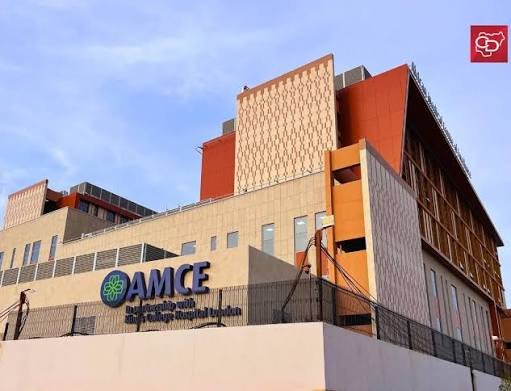
The African Medical Centre of Excellence (AMCE), Abuja, is providing a practical example of how blended finance can be used to develop specialist healthcare infrastructure and expand access to complex medical treatment in Africa.
A new case study by the Impact Investment Initiative for Global Health (Triple I for GH) details the financing structure behind the 170-bed specialist hospital, highlighting how development finance, international funding and commercial capital were combined to move the project from development to operations.
Developed by the African Export-Import Bank (Afreximbank) in partnership with King’s College Hospital London, AMCE Abuja was established to strengthen tertiary healthcare capacity in Nigeria and reduce the need for Africans to seek specialist treatment outside the continent.
The Centre has already begun delivering complex procedures, including its first open-heart surgery, West Africa’s first Stereotactic Body Radiation Therapy (SBRT) treatment for lung cancer and its first stem cell transplant for a patient with multiple myeloma.
It has also performed more than 10 cardiac interventions, including coronary angiographies, permanent pacemaker insertions and percutaneous coronary interventions.
The case study shows that Afreximbank’s financing was supported by long-term debt from the Japan International Cooperation Agency (JICA), in partnership with Mitsubishi UFJ Financial Group (MUFG) and Sumitomo Mitsui Banking Corporation (SMBC).
The Japanese financing supported the project during its development phase and helped de-risk the investment ahead of the Centre’s transition into operations.
Following commissioning, Nigerian commercial banks provided working-capital facilities to support the hospital as it began delivering services and building its patient base.
The financing structure is significant given the scale of Africa’s specialist healthcare deficit. The case study estimates that African patients spend between $6 billion and $10 billion annually on medical treatment outside the continent.
AMCE Abuja is designed to help reverse part of this trend by bringing advanced specialist treatment closer to patients, their families and support networks.
The Centre targets more than 200,000 patients in Nigeria and another 150,000 patients from other African countries during its first five years, representing a combined target of 350,000 patients.
Its infrastructure includes five operating theatres, three catheterisation laboratories, a 20-bed intensive care unit, 20 chemotherapy chairs and a dedicated stem cell laboratory.
The Centre has approximately 300 healthcare professionals, including about 250 Nigerians, while more than 2,000 Nigerians were employed during its construction.
Beyond infrastructure, the AMCE model combines specialist clinical services with workforce development, medical education and research. Its partnership with King’s College Hospital London provides access to international clinical expertise and supports the development of specialist capacity.
For Afreximbank, the Abuja project is also intended to serve as a pilot and proof of concept for similar specialist healthcare facilities elsewhere on the continent.
The bank is exploring opportunities to replicate the AMCE model in East and Central Africa, using lessons from Abuja to inform project financing, clinical partnerships, specialist recruitment and hospital operations.
The emerging model demonstrates how development finance can be used to crowd in commercial capital and international expertise for large-scale healthcare projects, while creating infrastructure capable of delivering complex treatment within Africa.
For a continent facing significant gaps in tertiary healthcare capacity and high levels of outbound medical travel, the AMCE experience offers a potential framework for mobilising investment into specialist healthcare infrastructure.