
AEW 2026: Africa’s Clean Cooking Push Exposes Growing LPG Import Vulnerability
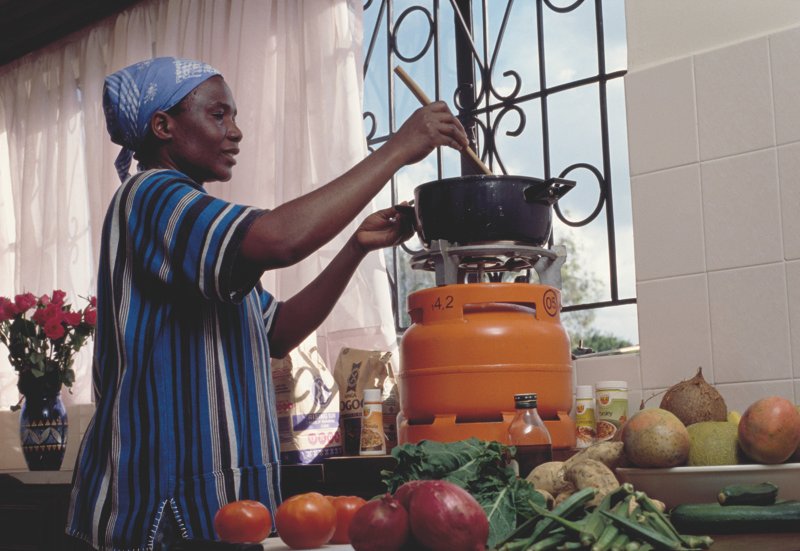
Africa’s push to achieve universal access to clean cooking is increasingly colliding with an energy-security challenge: heavy dependence on imported liquefied petroleum gas (LPG) to fuel the transition.
As African countries accelerate efforts to move households away from firewood, charcoal and other polluting fuels, industry stakeholders are calling for greater investment in domestic LPG production, storage, distribution and alternative clean cooking technologies to prevent the continent’s energy transition from creating a new import dependency.
The issue will come under scrutiny at African Energy Week (AEW) 2026 in Cape Town, where energy leaders will examine how Africa can expand clean cooking access while strengthening domestic energy supply.
Clean cooking connections across sub-Saharan Africa have tripled since 2010, while the International Energy Agency (IEA) expects the region to record its fastest annual expansion in access this year.
About 15 million people gained access to clean cooking in sub-Saharan Africa in 2025, a 35 per cent increase over the average annual gains recorded during the previous five years.
Yet the access gap remains enormous. Only 23 per cent of the region’s population had access to clean cooking solutions in 2024, leaving hundreds of millions of people reliant on traditional fuels that contribute to household air pollution, deforestation and carbon emissions.
LPG has emerged as the main driver of the transition, accounting for more than 70 per cent of people with access to modern cooking fuels and powering most new connections.
But that progress comes with a significant vulnerability.
Around half of sub-Saharan Africa’s LPG demand is currently supplied through imports, leaving domestic markets exposed to international commodity prices, currency depreciation, shipping costs and geopolitical disruptions.
Recent instability in the Middle East has reinforced those concerns, with disruptions and uncertainty in global energy markets adding pressure to cooking-fuel prices in several African markets.
The development has strengthened calls for countries to treat clean cooking not only as a social and environmental priority but also as an energy-security issue.
Africa is already responding with investments in infrastructure. At least 250 kilotons of additional LPG storage capacity is under construction across sub-Saharan Africa, representing an increase of more than 30 per cent. Total storage capacity reached about 800 kilotons in 2025, after expanding by more than 10 per cent over five years.
The continent is also beginning to diversify beyond LPG.
Modern bioenergy supply chains are expanding, with pellet production capacity reaching about 600 kilotons annually, while bioethanol production capacity has climbed to approximately one billion litres.
Policy momentum is also building. More than 120 clean cooking policies and programmes were implemented or announced across Africa between 2024 and early 2026, while over 30 countries introduced new clean-cooking access targets.
However, implementation remains a major challenge. Critical measures covering tariffs, product quality standards and carbon-credit frameworks are still being developed, raising concerns over whether policy commitments will translate into affordable, reliable and sustained access for households.
“Clean cooking is a matter of both public health and national energy security,” said NJ Ayuk, Executive Chairman of the African Energy Chamber.
“Africa has shown it can scale clean cooking when the policy and investment frameworks are right. At AEW this year, we can determine which distribution models hold up on the ground and how to bring private capital in behind them.”
The “Accelerating Clean Cooking for Domestic Energy Security” session at AEW 2026 will focus on regulatory reforms, public-private partnerships and distribution models capable of accelerating household access while reducing dependence on imported cooking fuels.
The October 12–16 event in Cape Town is also expected to examine experiences from Southern Africa and consider how successful clean-cooking models can be replicated across other African markets.
For Africa, therefore, the clean-cooking challenge is no longer simply about replacing traditional fuels.
It is about how to bring hundreds of millions of households into the modern energy economy without replacing dependence on firewood and charcoal with a new dependence on imported LPG.
That makes domestic production, storage infrastructure, efficient distribution and investment in alternative clean cooking fuels increasingly central to Africa’s energy-security agenda.