
Nigeria Defies Africa’s FDI Slump, But Continent Loses Ground in Global Investment Race
By Eyo Nsima
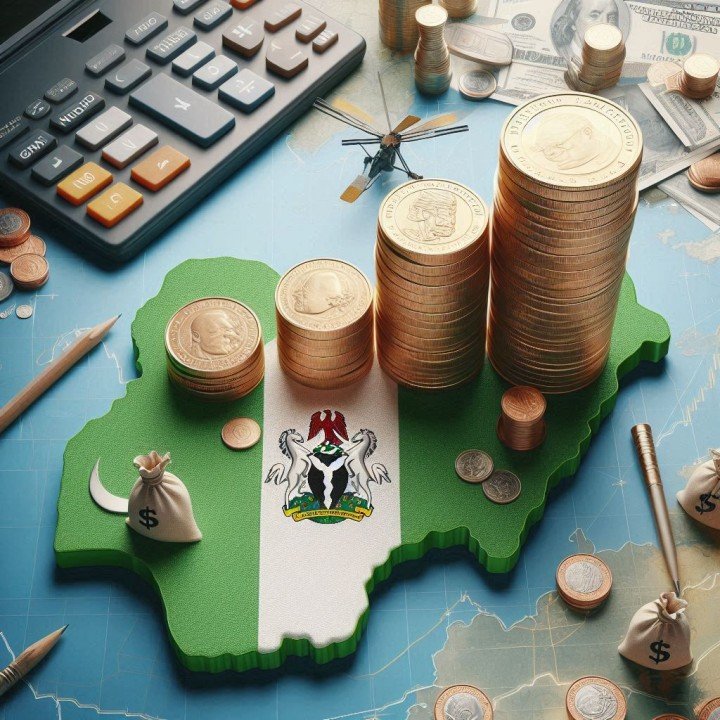
Nigeria emerged as one of Africa’s strongest investment performers in 2025, even as the continent suffered a sharp decline in foreign direct investment (FDI), underscoring both the country’s renewed appeal to investors and the broader challenge of Africa’s shrinking share of global capital.
This is according to the World Investment Report 2026 by the United Nations Conference on Trade and Development (UNCTAD), analysed in a new policy brief by the Bashir Adeniyi Centre for International Trade and Investment (BACITI) of the Nigerian Institute of International Affairs (NIIA).
The report showed that global FDI rebounded by 6 per cent in 2025 to $1.624 trillion, ending two consecutive years of decline. However, the recovery was uneven, with developed economies attracting the bulk of new investment while Africa’s inflows dropped by 26.3 per cent from $94 billion in 2024 to $70 billion in 2025.
The decline reduced Africa’s share of global FDI to just 4.3 per cent, despite the continent’s vast natural resources, youthful population and enormous infrastructure financing needs.
In contrast, Nigeria recorded one of the continent’s biggest rebounds, with inward FDI surging by 148.2 per cent, from $1.614 billion in 2024 to $4.005 billion in 2025.
The increase made Nigeria one of Africa’s leading investment destinations, ahead of Ethiopia, Morocco, Kenya, Côte d’Ivoire and Ghana, although still behind Egypt, Guinea and Mozambique.
According to BACITI, Nigeria accounted for about 5.8 per cent of Africa’s total FDI but only 0.25 per cent of global investment flows, highlighting the country’s continuing struggle to attract capital commensurate with the size of its economy.
Africa falls behind
While Africa struggled, investment surged in other regions.
Developed economies attracted $723 billion, representing an 11.4 per cent increase, while developing economies recorded only a modest 2.1 per cent rise to $901 billion.
Europe posted the strongest regional growth, with FDI climbing nearly 40 per cent to $285 billion, while developing Asia retained its position as the world’s largest destination among developing regions, attracting $644 billion.
Latin America and the Caribbean also strengthened their position, with investment increasing by 13.9 per cent to $188 billion.
The report noted that the world’s top 20 host economies accounted for more than 80 per cent of total global FDI, illustrating the increasing concentration of investment in countries offering policy certainty, strong infrastructure, reliable electricity, efficient logistics and skilled labour.
Nigeria’s rebound driven by energy
BACITI said Nigeria’s recovery was largely driven by major transactions in the oil, gas and industrial sectors rather than broad-based manufacturing investment.
Among the largest deals were Renaissance Africa Energy’s acquisition of Shell’s onshore assets and Huaxin Cement’s acquisition of Lafarge Africa, alongside investments in refining, mining and energy infrastructure.
The report cautioned that while these transactions boosted headline investment figures, they mainly involved ownership transfers and project financing rather than new greenfield manufacturing projects capable of generating large-scale employment, exports and technology transfer.
“Nigeria has regained some international investment momentum, but the composition of the rebound remains concentrated in energy and large corporate transactions,” BACITI stated.
Africa’s structural challenge
The report argued that Africa’s decline should not be interpreted solely as weakening investor confidence.
It noted that the continent’s exceptionally high 2024 performance had been inflated by Egypt’s multibillion-dollar Ras El-Hekma development project, backed by the United Arab Emirates.
With that one-off transaction absent in 2025, Africa’s FDI returned to more normal levels, although the continent still recorded its third-highest annual inflow since 1990.
Nevertheless, BACITI warned that Africa remains overly dependent on a handful of countries and large resource-based projects.
The value of announced greenfield investments fell by 31.2 per cent, from $115.1 billion to $79.1 billion, suggesting that although more projects were announced, they were generally smaller and less transformational.
Competition for strategic investment
The report observed that global investment is increasingly flowing into strategic sectors such as artificial intelligence infrastructure, semiconductors, clean energy technologies, critical minerals, renewable energy and digital infrastructure.
Globally, the share of greenfield investment directed toward these sectors rose from 16 per cent in 2020 to 44 per cent in 2025, reflecting a fundamental shift in investor priorities.
For Africa, this presents both an opportunity and a risk.
The continent possesses abundant natural gas, critical minerals, renewable energy resources and strategic maritime routes, but unless these investments create domestic industries, supplier networks and manufacturing capacity, Africa could remain primarily an exporter of raw materials.
Nigeria’s next challenge
BACITI argued that Nigeria should treat its 2025 investment rebound as “a springboard rather than a final victory.”
The centre urged policymakers to use energy-sector investment to stimulate broader industrialisation by developing petrochemicals, fertiliser plants, gas-to-power projects, fabrication yards and export-oriented manufacturing.
It also called for reforms to improve electricity supply, logistics, customs administration, ports and investment regulation, noting that investors increasingly assess countries based on the total cost of doing business rather than market size alone.
The report recommended shifting investment promotion from broad incentives to targeted investment-ready projects, while measuring success not simply by the value of capital inflows but by their impact on production, exports, technology transfer, employment and local supplier development.
A new investment race
According to BACITI, the World Investment Report 2026 confirms that the global competition for investment has entered a more strategic phase.
Countries are increasingly competing for capital linked to energy security, advanced manufacturing, digital infrastructure and resilient supply chains, rather than relying solely on tax incentives.
For Africa, and Nigeria in particular, the challenge is no longer just attracting foreign investment, but ensuring that every dollar invested generates greater domestic value addition, industrial capacity, skilled jobs and export competitiveness.
The report concluded that Nigeria has a strategic choice to make: remain largely a market for resource extraction or leverage its energy resources, large domestic market and the African Continental Free Trade Area (AfCFTA) to become a regional manufacturing, logistics and industrial hub.