
Competition intensifies as Dangote Refinery, others align petrol Depot price at N1,216/Litre
Intense competition in Nigeria’s downstream petroleum market has forced major oil marketing firms to align their ex-depot price of Premium Motor Spirit (PMS), commonly known as petrol, at ₦1,216 per litre, signaling a fresh phase of price competition driven by abundant supply and efforts to retain market share.
An analysis of the Daily Depot Price Intelligence Report for Thursday, July 30, 2026, showed that several leading depots in Lagos have converged on the same petrol price, reflecting a highly competitive market environment.
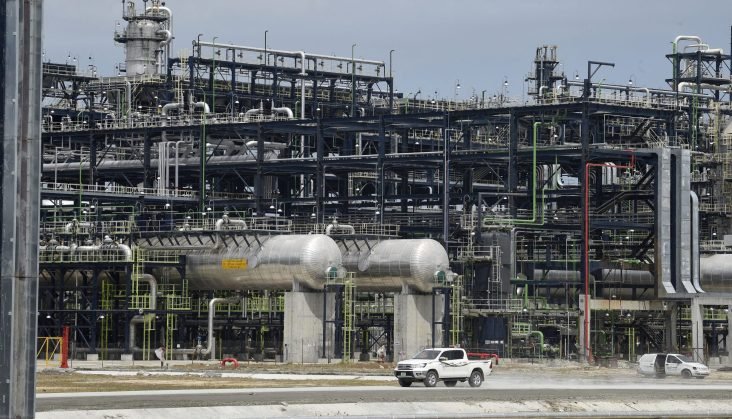
The report indicated that Dangote Petroleum Refinery, NIPCO, Pinnacle, AIPEC, Aiteo, ASCON and T.Time all sold PMS at ₦1,216 per litre, the lowest prevailing depot price in Lagos.
The latest pricing comes barely days after Dangote Refinery reduced its gantry price to ₦1,216 per litre, triggering immediate responses from competing depot owners eager to remain attractive to independent marketers.
Industry analysts said the uniform pricing demonstrates that marketers are increasingly using competitive pricing rather than supply shortages to influence market share.
According to the report, the average PMS price stood at ₦1,217 per litre in Lagos, compared with ₦1,220 in Calabar, ₦1,229 in Port Harcourt, and ₦1,234 in Warri, indicating that Lagos remains the country’s most competitive fuel supply hub.
The report also showed that PMS prices in Warri ranged between ₦1,224 and ₦1,240 per litre, with Sigmund selling at ₦1,224, while Matrix and T.S.L sold at ₦1,225, and Bulk Strategic priced petrol at ₦1,240 per litre.
In the diesel (AGO) market, prices remained considerably higher. The report showed Matrix offered the lowest diesel price in Warri at ₦1,720 per litre, while Aradel, Nepas, Prudent and Zamson sold around ₦1,670–₦1,673 per litre. Across regions, diesel averaged ₦1,639 per litre in Lagos, ₦1,687 in Calabar, and ₦1,693 in Port Harcourt.
The report also placed the estimated landing cost of imported petrol at ₦1,048 per litre as of July 29, 2026, suggesting that import economics continue to influence domestic pricing despite increased local refining.
Energy analysts said the convergence of depot prices reflects an increasingly liberalised market in which operators are responding swiftly to competitors’ pricing decisions.
“The downstream market has become significantly more competitive than it was a year ago. Once a dominant supplier reduces price, other depot owners have little choice but to match it or risk losing customers,” an industry analyst said.
Another marketer noted that abundant product availability from domestic refining, combined with imported volumes already in the market, has strengthened buyers’ negotiating power.
“Independent marketers now have more options. They simply buy from whichever depot offers the best commercial terms, making price competition unavoidable,” the marketer said.
Market observers believe the current price alignment could help moderate retail petrol prices if marketers pass on the lower acquisition costs to consumers. However, they cautioned that future pricing will continue to depend on international crude oil prices, exchange rate movements and freight costs.