
Africa’s power sector emissions to rise in 2026 as electricity demand outpaces clean energy growth – IEA
By Eyo Nsima
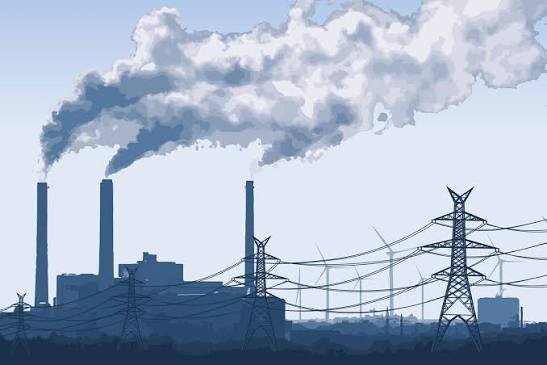
Africa is expected to record an increase in carbon dioxide (CO₂) emissions from electricity generation in 2026 as rising electricity demand continues to outpace the deployment of low-carbon power sources, according to the latest forecast by the International Energy Agency (IEA).
In its Electricity Mid-Year Update 2025, the IEA projected that global CO₂ emissions from electricity generation will rise by more than one per cent in 2026, reversing the flat growth recorded in 2025, with Africa listed among the regions expected to post higher emissions this year.
The agency attributed the increase to stronger electricity demand in emerging and developing economies and a renewed reliance on fossil-fuel generation following disruptions in global energy markets.
According to the report, increased emissions in China, India, Southeast Asia, Central and South America, Africa and Eurasia will only be partly offset by significant declines in Europe and the United States, resulting in global power-sector emissions reaching a new record high in 2026.
Middle East crisis adds pressure
The IEA said the crisis in the Middle East during the first half of 2026 disrupted natural gas supplies and pushed gas prices higher, prompting several countries to switch from natural gas to coal for electricity generation.
Weather conditions also contributed to increased coal- and oil-fired electricity production in recent months, further raising emissions.
Although the report did not quantify Africa’s emissions increase, it noted that the continent is among the regions where fossil-fuel generation is expected to rise as governments struggle to meet rapidly growing electricity demand.
Implications for African countries
The outlook presents significant challenges for African countries pursuing economic growth while seeking to meet climate commitments under the Paris Agreement.
Many countries, including Nigeria, South Africa, Egypt, Algeria, Angola, Ghana and Kenya, continue to depend on fossil fuels for a substantial share of electricity generation.
South Africa remains one of the continent’s largest coal users, while Nigeria relies heavily on natural gas-fired power plants. In several other countries, diesel and heavy fuel oil generators continue to supplement unreliable grid electricity.
Energy experts said rising emissions highlight the urgent need for greater investment in renewable energy, transmission infrastructure and battery storage to reduce dependence on fossil fuels.
Rising demand outpaces investment
Africa has one of the fastest-growing electricity markets in the world, driven by rapid population growth, urbanisation and industrialisation.
However, investment in electricity infrastructure has not kept pace with demand, forcing many countries to rely on existing fossil-fuel plants or expensive diesel generation.
Analysts noted that unless renewable energy projects are deployed more rapidly, electricity demand across the continent will continue to be met largely by carbon-intensive fuels.
Balancing development and climate goals
The report also reinforces Africa’s long-standing argument that the continent should be allowed to utilise its abundant natural gas resources as a transition fuel while expanding renewable energy capacity.
African governments have consistently argued that the continent contributes only a small share of global greenhouse gas emissions despite accounting for a significant proportion of the world’s population without access to electricity.
Countries such as Nigeria, Mozambique, Tanzania, Senegal and Mauritania are investing heavily in natural gas projects, arguing that gas can support industrialisation, improve electricity access and reduce reliance on more polluting fuels such as coal and diesel.
Global outlook
Globally, the IEA expects carbon dioxide emissions from electricity generation to plateau in 2027, as more renewable energy projects come on stream and the share of low-emission electricity sources continues to increase.
The agency forecasts that the carbon intensity of global electricity generation will decline from 435 grams of CO₂ per kilowatt-hour in 2025 to 410 grams per kilowatt-hour by 2027, reflecting the continued expansion of renewable energy and other low-emission technologies.
While Europe is expected to record the sharpest decline in electricity-related emissions over the next two years, Africa’s projected increase underscores the continent’s dual challenge of expanding electricity access for millions of people while limiting the environmental impact of that growth.
Energy analysts said the report highlights the need for increased climate finance, technology transfer and investment in renewable energy if African countries are to achieve universal electricity access without significantly increasing carbon emissions.