
US, Qatar lead global LNG capacity expansion, Nigeria ranks 7th
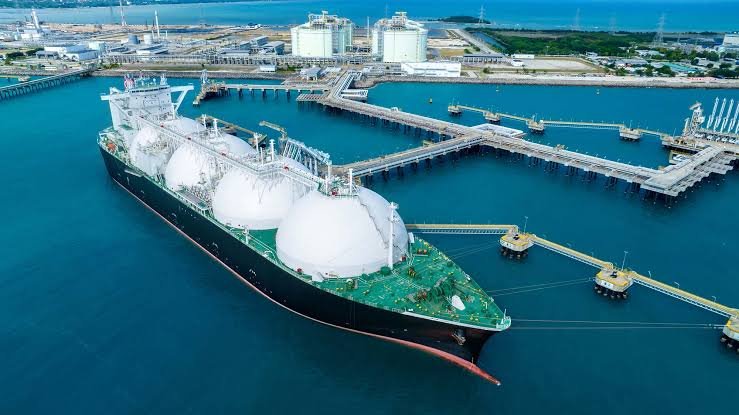
The United States and Qatar are set to dominate the next wave of global liquefied natural gas, LNG, capacity expansion, with the two countries accounting for the bulk of new liquefaction capacity scheduled to come on stream between 2025 and 2030.
Based on the latest project ramp-up schedules, the United States has about 208.1 billion cubic metres per year (bcm/y) of LNG capacity associated with projects listed as operational, under construction or scheduled within the period, putting it far ahead of other LNG-producing countries.
Qatar follows with about 87 bcm/y, while Russia and Canada rank third and fourth with approximately 26.9 bcm/y and 26.3 bcm/y, respectively.
Mozambique, with about 22.4 bcm/y, ranks fifth, followed by the United Arab Emirates with 13 bcm/y.
Nigeria ranks seventh, with the 10.9 bcm/y, equivalent to about 8 million tonnes per annum (mtpa), capacity of the Nigeria LNG Train 7 project.
The figures are contained in a project pipeline showing post-final investment decision, FID, LNG projects with scheduled start dates between 2025 and 2030, alongside selected approved but inactive projects.
The global LNG industry is expected to witness a major increase in liquefaction capacity during the period, with annual additions from post-FID projects projected to rise from around 35 bcm/y in 2025 to a peak of approximately 95 bcm/y in 2028, before declining in 2029 and 2030.
The United States is expected to be the principal driver of the expansion, with several major projects under construction or progressing towards commissioning.
These include Commonwealth LNG, CP2 LNG, Golden Pass LNG, Louisiana LNG, Port Arthur LNG, Rio Grande LNG, Corpus Christi projects and other developments.
The US pipeline includes projects with a combined nameplate capacity of more than 200 bcm/y in the dataset, underscoring the country’s rapidly expanding role in the international LNG market.
Qatar’s expansion is being driven principally by the giant North Field development. The North Field East project has a nameplate capacity of 43.5 bcm/y, while North Field South adds another 21.8 bcm/y.
An additional 21.7 bcm/y is associated with North Field West, which is approved but not yet under construction. If developed, the project would further strengthen Qatar’s position as one of the world’s dominant LNG exporters.
Russia’s Arctic LNG 2, with a nameplate capacity of 26.9 bcm/y, is also included in the project pipeline, although the project has started production under sanctions.
Canada is another major contributor, with LNG Canada, Cedar LNG and Woodfibre LNG combining for approximately 26.3 bcm/y in the listed projects.
In Africa, Mozambique is emerging as the largest source of new LNG capacity, with 22.4 bcm/y from Coral North FLNG and Mozambique LNG.
Mozambique LNG alone is expected to contribute 17.5 bcm/y, or 12.9 mtpa, when it begins production, currently scheduled for 2029.
Nigeria’s LNG expansion is comparatively modest, with Train 7 adding 10.9 bcm/y, equivalent to 8 mtpa, to the country’s liquefaction capacity.
The project is expected to begin production in 2027.
The data also highlights a challenge for established LNG producers, including Nigeria, Australia and Indonesia. Legacy LNG projects in these countries are expected to experience declining output in coming years, potentially offsetting part of the increase generated by new projects.
The projected expansion could therefore reshape global LNG trade flows, increasing competition among established exporters while giving emerging producers greater access to international gas markets.
However, the trajectory remains subject to significant risks. Geopolitical disruptions, including those linked to the continuing conflict in the Middle East, could affect project schedules, investment decisions and LNG supply.
Further project delays, new FIDs and the reactivation of approved but currently inactive projects could also materially alter the global capacity outlook.
For Nigeria, the projected decline in legacy production makes the timely completion of Train 7 particularly important. While the project would increase national LNG capacity, sustaining Nigeria’s position in the global market will increasingly depend on new investments to replace declining output from mature assets and develop additional gas resources.
Top LNG capacity additions in the 2025–2030 project pipeline
United States — 208.1 bcm/y
Qatar — 87.0 bcm/y
Russia — 26.9 bcm/y
Canada — 26.3 bcm/y
Mozambique — 22.4 bcm/y
United Arab Emirates — 13.0 bcm/y
Nigeria — 10.9 bcm/y
Argentina — 8.1 bcm/y
Australia — 6.8 bcm/y
Mexico — 4.4 bcm/y