
Namibia moves to avoid Nigeria’s oil trap as first oil nears 2030
By Eyo Nsima
Namibia is seeking to avoid the pitfalls that have confronted established African oil producers such as Nigeria as it prepares to move from major discoveries to commercial production, placing local content, revenue management, industrialisation and institutional capacity at the centre of its emerging petroleum strategy.
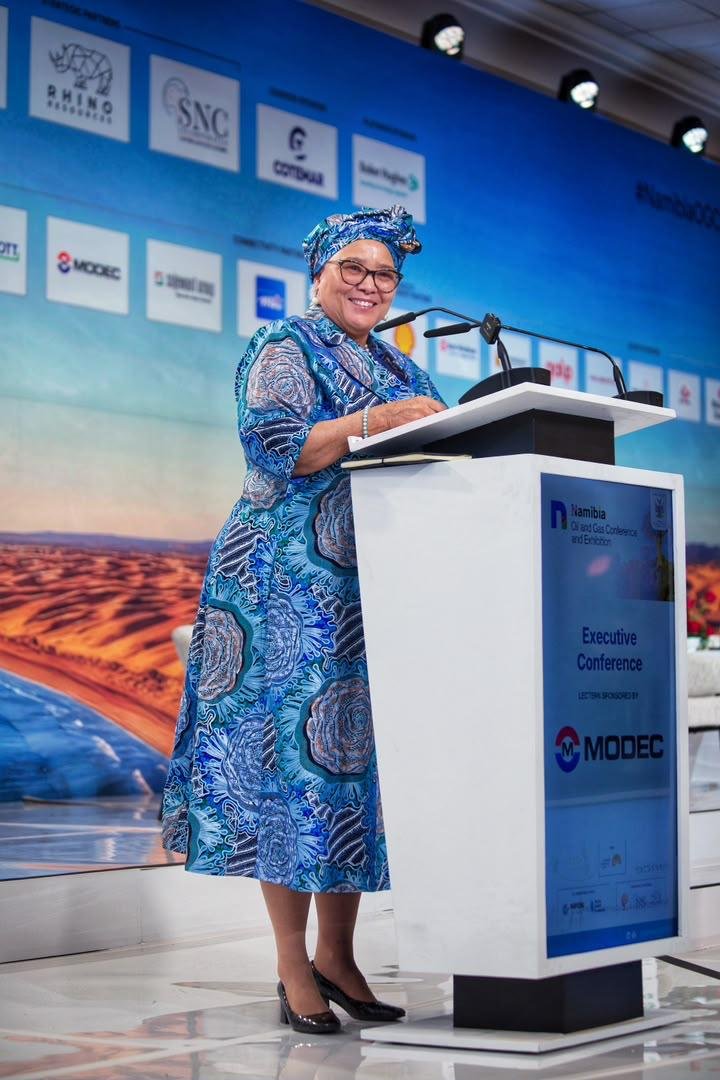
Speaking at the opening of the Namibia Oil and Gas Conference 2026 in Windhoek, Vice President Lucia Witbooi said the country’s oil discoveries would only become a national success if they translated into jobs, local businesses, technology, infrastructure, government revenues and savings for future generations.
“But let me state clearly: discovery is not the destination,” Witbooi said.
“A resource beneath our waters becomes a national success only when it is responsibly developed and translated into tangible improvements in the lives of our people.”
Her remarks offer a sharp contrast with Nigeria’s experience as Africa’s long-established oil producer, where the country continues to grapple with production challenges, underinvestment and difficulties in converting petroleum resources into broad-based industrial development.
Namibia is preparing for the development of major discoveries, including Venus and Mopane, with Venus currently among the country’s most advanced offshore projects.
Witbooi said publicly stated plans envisaged an FPSO-based Venus development with a production plateau of approximately 150,000 barrels of oil equivalent per day and first oil around 2030, subject to final investment approval and regulatory processes.
“The Government therefore recognises that timely project delivery matters,” she said, but warned that “speed cannot come at the expense of sound governance, appropriate fiscal returns, environmental protection or long-term national interests.”
The country also wants petroleum to drive a wider industrial ecosystem rather than operate as an enclave.
“The value chain must extend beyond the offshore platform to ports, logistics, fabrication, engineering, marine services, financial services, information technology, environmental services, catering, accommodation, training, research and development, manufacturing and other supporting sectors,” Witbooi said.
Namibia is advancing a National Upstream Petroleum Local Content Policy designed to increase employment, local supplier participation, technology transfer and Namibian ownership.
Witbooi urged oil companies and contractors to make local participation part of project planning from the outset.
“I therefore call upon operators and contractors to treat local content as a strategic business responsibility rather than a compliance exercise,” she said. “Waiting until major contracts are already awarded will be too late.”
She stressed, however, that local participation must remain commercially viable.
“Local participation cannot mean compromising safety, quality, efficiency or international competitiveness,” she said.
Namibia is also seeking to prevent oil revenues from being consumed at the expense of future generations through its Welwitschia Sovereign Wealth Fund.
“The principle is simple: petroleum revenue must not be treated as an invitation to consume more today at the expense of tomorrow,” Witbooi said.
For Nigeria, which has relied heavily on petroleum revenues for decades, the Namibian approach offers a significant policy lesson: strong institutions, local capacity and effective revenue-management mechanisms need to be established before oil production reaches its peak.
Also speaking at the conference, Hon. Kornelia Shilunga, Special Advisor and Head of the Upstream Petroleum Unit, said Namibia was positioning its emerging oil and gas industry as a catalyst for industrialisation, job creation and economic diversification rather than simply a source of crude oil exports.
Shilunga said the country’s significant discoveries in the Orange Basin had created both major opportunities and a responsibility to ensure that petroleum resources deliver lasting benefits to Namibians.
According to her, the conference theme, “From Decision to Dividend: Making Namibia’s Oil Work for Namibians,” was appropriate as the country moves from exploration towards commercial development.
She said the government was engaging investors and operators on major discoveries, including the Venus development operated by TotalEnergies, as Namibia works towards final investment decisions.
“Project development requires capital, technology, infrastructure, skills, regulatory certainty and strong partnerships between Government and industry,” Shilunga said.
She said the National Upstream Local Content Policy, recently approved by Cabinet, would increase Namibian participation across the petroleum value chain through local business development, employment, skills and technology transfer, and access to procurement opportunities.
“Local content must, however, go beyond participation for its own sake. We want to see Namibian companies developing the capacity, expertise and financial strength to compete within the petroleum industry and, ultimately, beyond it,” she said.
Shilunga also called for greater value addition beyond crude oil exports, identifying refining, petrochemicals, gas-to-power, logistics, fabrication, marine services, storage and engineering as areas capable of generating wider economic benefits.
According to her, the petroleum sector should serve as an anchor for industrial development under Namibia’s NDP6 framework, supporting economic diversification, employment and value addition.
She identified Walvis Bay and Lüderitz as potential petroleum service and logistics hubs, saying infrastructure would be critical to the development of the sector.
On investment, Shilunga said Namibia remained open to investors willing to bring capital, technology, expertise and long-term commitment to its frontier basins.
“Namibia is open for responsible investment. Namibia is open for partnership. And Namibia is open for innovation,” she said, stressing that investments must support the country’s broader development agenda.
“The question before us is no longer simply ‘Does Namibia have oil?’ The more important question is: ‘What will Namibia do with the opportunity that oil and gas presents?’” Shilunga said.
She added that first oil should be regarded as a milestone rather than the ultimate objective.
“The first barrel will be an important milestone, but it cannot be the destination,” she said, stressing that the real dividend must come through jobs, stronger Namibian businesses, infrastructure, technology transfer, skills development, increased government revenues and industrial growth.
For Namibia, the challenge is now to turn these commitments into measurable outcomes before first oil arrives. For Nigeria and other African oil producers, Namibia’s emerging model offers a reminder that discovering oil may create wealth, but how that wealth is managed ultimately determines whether it transforms an economy.