
Energy Transition: Nigeria currently facing challenges and opportunities, and the gas
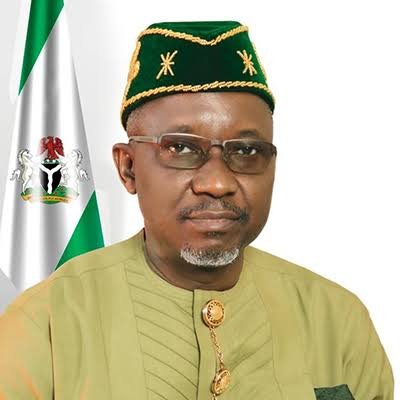
By Hon. Ekperikpe Ekpo
It is indeed an honor for me to deliver the Gas Industry Address as the Honourable Minister of State for Petroleum Resources (Gas) as part of the opening ceremony of the 7th edition of the Nigeria International Energy Summit (NIES 2024). This esteemed gathering provides a crucial platform for the exchange of ideas and strategies that will shape the future of our nation’s energy sector.
The theme of this summit; ‘Navigating the new energy world order: Security, Transition, and Finance,’ underscores the challenges and opportunities that define our times. The theme resonates deeply with the path that the gas industry must tread to ensure Nigeria’s economic transformation.
Allow me to shed light on the symbiotic relationship between the theme of the summit and the transformative potential of the gas industry in our great nation.
Energy security extends beyond geopolitical stability to include the resilience, diversification, and reliability of energy infrastructure. The gas industry, with abundant domestic reserves of proven 208TCF of gas and exploration potential, is crucial for enhancing energy security. In the light of the above, Nigeria has no business with energy poverty.
On transition to a sustainable energy future, the gas industry serves as a bridge fuel, facilitating the shift from conventional to renewable energy sources. Natural gas, with its lower carbon footprint and versatility, aligns with global climate objectives while providing a reliable solution to meet energy needs. Nigeria, with significant gas reserves, should leverage this advantage to become a key player in the global energy transition.
Finance is essential for transformative endeavors, and the gas sector is no exception. To unlock the full potential of gas resources, attracting both domestic and foreign investments is important. Collaboration with international partners, financial institutions, and the private sector is pivotal for securing funding for gas infrastructure development.
Nigeria is currently facing both challenges and opportunities, and the gas industry plays a crucial role in shaping the country’s energy future. The nation is rich in natural gas reserves. It is now essential to strategically utilize these resources to drive economic development, job creation, and environmental sustainability.
As we are all aware, overdependence on oil revenue poses significant economic risks for our nation. Despite efforts to diversify the economy away from oil dependence, we have faced numerous challenges. However, it is in times of challenge that innovation and strategic vision become imperative.
Today, I stand before you to advocate for a shift, a shift towards the vast potential that lies in our gas sector.
The shift towards gas is not merely an option but a necessity for our economic resilience. The gas industry presents a unique opportunity to diversify our revenue streams, reduce dependence on oil, and create a more robust and sustainable economic foundation.
Our journey to revitalize the country’s economy through Natural Gas should stand on four key pillars.
First, we are accelerating the deployment of gas-fired power plants to enhance the reliability and availability of electricity across the nation. This should come hand-in-hand with encouraging private sector participation in the power sector through attractive investment frameworks and incentives.
Second, we are going to sustain the promotion of the use of natural gas as a feedstock for industries, reducing operational costs and enhancing competitiveness. In addition, we should also facilitate the establishment of gas-based industries to create more employment opportunities and boost economic growth.
Third, we will continue the development of the necessary infrastructure to ensure widespread access to clean and affordable natural gas for domestic consumers and also encourage the adoption of compressed natural gas (CNG) and liquefied petroleum gas (LPG) for transportation and household use, respectively.
Last but not the least, we are going to strengthen partnerships with neighbouring countries to enhance regional gas trade, cooperation and also explore more international markets for our liquefied natural gas (LNG) exports, thereby, positioning Nigeria as a major player in the global gas market.
This Gas Industry Address will not be complete without a couple of status reports.
I am pleased to report that significant progress has been made in the realization of the ‘Decade of Gas’ vision. The official secretariat is now operational and fully functional.
On September 12, 2023, the Nigerian Upstream Petroleum Regulatory Commission (NUPRC) announced the successful bidders for the Nigerian Gas Flare Commercialization Program. Out of 300 interested entities, 42 were chosen, receiving 40 flare sites for independent development, while 4 entities got 9 sites each for cluster development. It is anticipated that the allocated entities will commence full operations on their sites this year.
Another milestone in our journey towards a gas-focused economy is the Ajaokuta-Kaduna-Kano (AKK) pipeline. I am pleased to report that significant progress has been made in the construction of this critical infrastructure project, and we are on track to ensure its completion and commissioning as scheduled.
The Obiafu/Obrikom/Oben (OB3) is a vital piece of gas infrastructure for the supply of feedstock to the AKK pipeline. This pipeline is among the biggest gas transmission systems in both Nigeria and Africa. I am highly elated to announce that going by the Contractor estimates, the OB3 pipeline will be completed by March 2024 and the 42″ 127 km pipeline will supply 2BCF per day. Upon completion, this pipeline is intended to supply the AKK pipeline with gas from the three fields of Obiafu, Obrikom, and Oben. I will like to use this opportunity to appreciate the resilience of the NNPCL Group for their steadfastness and proactive approach into ensuring a timely completion of the OB–3 pipeline project.
The President Bola Tinubu administration is fully committed to creating an enabling environment for the growth of the gas sector. The administration is actively implementing policies and regulatory frameworks that encourage investment, promote innovation, and ensure sustainability. The private sector is welcome onboard. Together, we can transform our abundant natural gas resources into a driving force for economic development and ensure that Nigeria emerges as a key player in the global energy landscape.
Finally, the gas sector is not merely a component but a cornerstone in navigating the challenges and opportunities presented by the new energy world order. Let us leverage our rich gas resources to enhance energy security, facilitate a seamless transition, and attract the necessary finance to propel Nigeria into a sustainable and prosperous energy future.
I look forward to engaging in fruitful discussions and collaborative efforts that will shape the trajectory of our nation’s energy landscape.
– Being Gas industry Address by Hon. Minister of State for Petroleum Resources (Gas), Hon. Ekperikpe Ekpo at the opening ceremony of the 7th Edition of Nigeria International Energy Summit 2024