
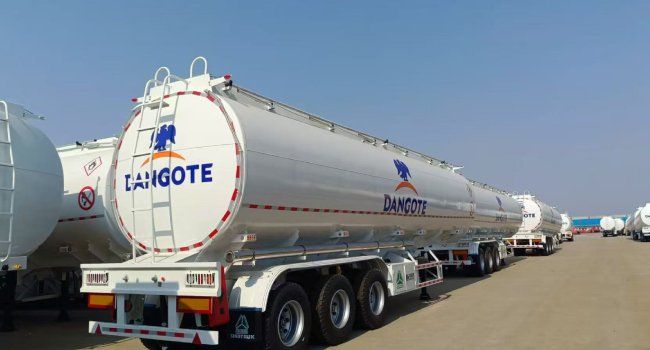
EDITORIAL: Dangote’s Free Fuel Delivery Must Translate to Cheaper Petrol
Dangote Refinery’s decision to absorb delivery costs is a bold intervention that could lower distribution expenses, intensify competition and ease the burden on consumers. But the savings must reach the pump.
Dangote Petroleum Refinery’s expansion of its free petroleum product delivery initiative to Kano, Imo, Anambra, Nasarawa and other states is a welcome development in Nigeria’s downstream petroleum market.
More importantly, it raises a fundamental question: if the cost of getting petrol to the market is falling, why should consumers not see the benefit at the pump?
That is the standard by which this initiative should ultimately be judged.
The programme, which initially covered Lagos, Ogun, Rivers, Kaduna, Abuja and Delta, removes a significant expense from the distribution chain by taking products closer to marketers and retailers at no delivery cost to them.
For marketers operating far from the refinery, this can make a substantial difference. Haulage, vehicle operations, insurance, road risks and other logistics expenses add to the cost of petroleum products and, ultimately, to what consumers pay.
Dangote Refinery is now taking on part of that burden.
That is not merely a commercial gesture. It is a potentially important intervention in a market where distribution costs have long contributed to price differences across regions.
Fatima Aliko Dangote, Group Executive Director, Commercial Operations, Oil & Gas, WAEP and Fertiliser, said the objective was to ensure that the benefits of domestic refining are felt beyond the refinery gate.
That objective deserves support.
Nigeria has spent decades trying to build sufficient domestic refining capacity. With the emergence of large-scale refineries, the country is finally beginning to move away from an import-dependent downstream model.
But local production alone does not guarantee cheap petrol.
If refined products are produced locally but must still travel long distances at high cost before reaching consumers, much of the advantage of domestic refining can be lost.
This is why distribution matters.
The Independent Petroleum Marketers Association of Nigeria has welcomed the initiative, with its National Publicity Secretary, Chinedu Ukadike, saying it would reduce financial and logistical pressures on independent marketers.
His point about working capital is particularly important. When marketers pay for products and wait days or weeks for loading and transportation, their funds remain tied down. That increases the cost and risk of doing business.
Free delivery can improve liquidity, shorten the supply chain and allow marketers to deploy their capital more efficiently.
It can also reduce exposure to some of the risks associated with long-distance transportation.
But there is a catch.
The savings must not disappear into marketers’ margins.
A reduction in distribution costs should create room for lower pump prices. If the cost savings are simply absorbed elsewhere in the value chain, motorists and households will gain little.
This is where competition must do its work.
Dangote’s initiative could force other suppliers and marketers to become more efficient. If one marketer can obtain products closer to his market at lower cost, competitors should have an incentive to respond with better prices and services.
That is the real meaning of deregulation: not simply freedom to determine prices, but a market in which efficiency and competition deliver better outcomes for consumers.
The Federal Government and regulators should therefore resist the temptation to micromanage the market while ensuring that it remains transparent and competitive.
They should monitor market behaviour, discourage anti-competitive practices and make pricing information readily available. A deregulated market can work only when consumers have choices and suppliers compete fairly.
Dangote Refinery should also be encouraged to extend the programme.
The expansion to Kano, Imo, Anambra and Nasarawa is significant, but the opportunity is much larger. More states, particularly distant northern markets, should be covered if the initiative can be sustained commercially.
This could help reduce regional price disparities and make locally refined petroleum products more accessible across the country.
There is also a broader message for Nigeria’s downstream sector.
The country must move beyond measuring refining success by barrels processed or litres produced. The real test is whether domestic refining makes the entire supply chain more efficient.
That means cheaper transportation, faster deliveries, better storage, stronger competition and ultimately more affordable products.
Dangote Refinery, with its 700,000-barrel-per-day capacity, has become a major force in this market. Its decisions can therefore influence the behaviour of marketers and competitors across the country.
That influence should be used to deepen competition rather than create another form of market dependence.
Other refiners and petroleum suppliers should respond with efficiency, not complaints. Marketers should respond with sharper pricing and better service. Regulators should respond by protecting competition and consumers.
And consumers should expect to see the benefits.
Dangote’s free delivery initiative is a welcome step because it tackles a real weakness in Nigeria’s downstream supply chain. But it should not end with applause, press statements or increased volumes delivered to more states.
The real dividend must be cheaper petrol.
If Dangote absorbs delivery costs, marketers reduce their expenses and competition intensifies, there should be a visible downward pressure on pump prices.
If that happens, the initiative will demonstrate what domestic refining, deregulation and competition can achieve together.
If it does not, then an important opportunity will have been missed.
Nigeria needs a downstream petroleum market in which efficiency is rewarded, unnecessary costs are eliminated and consumers are the ultimate beneficiaries.
Dangote has taken the first step. The market must now ensure that the savings travel the rest of the way — from the refinery gate to the consumer’s fuel tank.