
Editorial: Nigeria’s energy gains must translate into security, affordability
The latest June 2026 data from the Nigerian Midstream and Downstream Petroleum Regulatory Authority, NMDPRA, presents a petroleum sector that is making progress in some areas but remains vulnerable in others. The figures should therefore prompt more than celebration of rising refinery utilisation and gas supply. They should compel policymakers to ask a fundamental question: Is Nigeria building a truly secure and sustainable energy market, or merely managing persistent supply gaps?
The factsheet contains encouraging developments. Average capacity utilisation of domestic refineries reached 101.36 per cent in June, while modular refineries supplied an average 562,000 litres of petroleum products daily. Total gas supply also rose to 5.116 billion standard cubic feet per day, with 2.126 Bscf/d going to the domestic market and 2.990 Bscf/d supplied to NLNG.
These are important developments in a country that has for decades struggled to convert its abundant petroleum resources into adequate domestic energy supply.
But the figures also expose uncomfortable weaknesses.
Nigeria’s petrol stock sufficiency stood at only 20 days in June, against the NMDPRA’s required threshold of 30 days. LPG stock sufficiency was even lower at 16 days. Only diesel, at 37 days, and aviation fuel, at 73 days, exceeded the 30-day benchmark.
This is not a comfortable position for a country whose economy remains heavily dependent on petroleum products.
The government and industry must therefore resist the temptation to equate refinery capacity with energy security. A refinery can operate at high utilisation and yet the country can remain vulnerable to supply disruptions if adequate stocks, logistics, feedstock and distribution systems are not in place.
The petrol figures are particularly instructive.
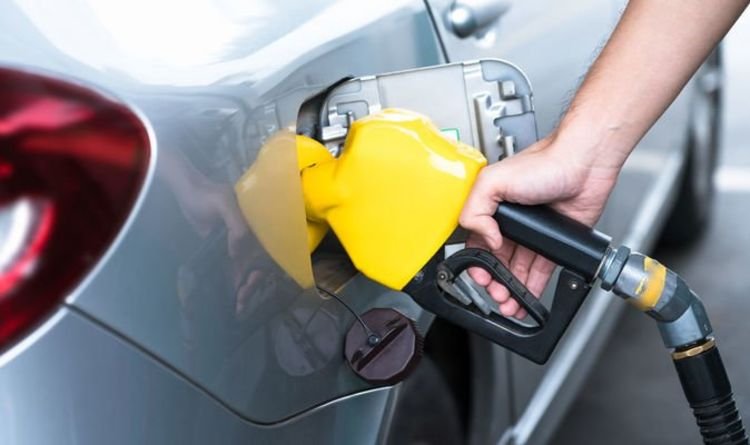
Nigeria recorded average daily petrol receipts of 50.6 million litres in June, against consumption of 47.4 million litres per day. On the surface, that suggests a comfortable balance. Yet the resulting stock cover remained only 20 days.
This means Nigeria needs to build stronger strategic reserves and improve the resilience of its supply chain. The objective should not merely be to meet today’s consumption but to guarantee supply during refinery maintenance, crude shortages, shipping disruptions or other emergencies.
The LPG position requires even greater attention.
Daily LPG receipts of 5.1 kilotonnes exceeded consumption of 4.1 KT/day, yet stock sufficiency remained only 16 days. At a time when Nigeria is seeking to expand LPG adoption and move households away from environmentally damaging cooking fuels, such a limited buffer is inadequate.
Government and investors must therefore prioritise LPG storage, transportation, processing and distribution infrastructure. Expanding consumption without strengthening supply infrastructure risks exposing consumers to periodic shortages and price volatility.
The gas figures also deserve closer scrutiny.
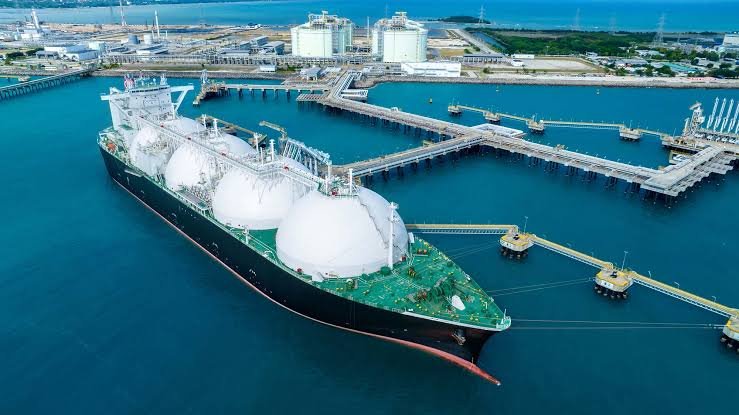
Nigeria supplied an average 5.116 Bscf/day of gas in June. However, only 2.126 Bscf/day went to the domestic market, while 2.990 Bscf/day was supplied to NLNG.
There is nothing inherently wrong with exporting gas. Nigeria needs foreign exchange and LNG remains an important source of export earnings. But the country must strike the right balance between exports and domestic requirements.
The power sector, in particular, cannot continue to suffer from inadequate gas supply while Nigeria exports substantial volumes of the commodity. Gas-to-power received only 0.509 Bscf/day during the month, while gas-based industries received 0.643 Bscf/day and commercial users 0.554 Bscf/day.
The answer is not to undermine LNG exports. Rather, Nigeria must increase gas production and processing sufficiently to satisfy both domestic and export markets.
This is where the reported 52.23 per cent average utilisation of major gas-processing facilities becomes important. If significant processing capacity remains available, the country should be asking why it is not being fully utilised.
Similarly, major gas pipeline projects must move beyond construction milestones to actual economic impact. Infrastructure only becomes valuable when it delivers gas to power plants, industries and other consumers.
The broader message from the June factsheet is clear: Nigeria’s energy challenge is increasingly shifting from resource availability to infrastructure, investment, commercial structures and supply-chain efficiency.
The country has crude oil. It has gas. It now has significant domestic refining capacity. It has major gas-processing facilities and pipelines under development.
What Nigeria needs is to make these assets work together.
Government must therefore focus on reliable crude supply to refineries, adequate strategic product reserves, expanded LPG infrastructure, efficient gas processing and pipelines, and commercially sustainable domestic gas markets.
The private sector also has a critical role. Investors should be encouraged to develop storage, pipelines, gas processing, LPG infrastructure and refinery-support facilities.
Most importantly, energy policy must be measured by outcomes rather than announcements.
The real test is not how many refineries Nigeria has, how much gas it produces or how many pipelines are under construction. The real test is whether households, manufacturers, airlines, transport operators and power generators can obtain energy reliably, predictably and at competitive prices.
The June 2026 factsheet shows that Nigeria has made progress. But it also reminds us that energy security is not achieved when supply improves temporarily; it is achieved when the system has enough capacity, reserves, infrastructure and investment to withstand disruption.
Nigeria must now move from managing energy shortages to building an energy system capable of preventing them.