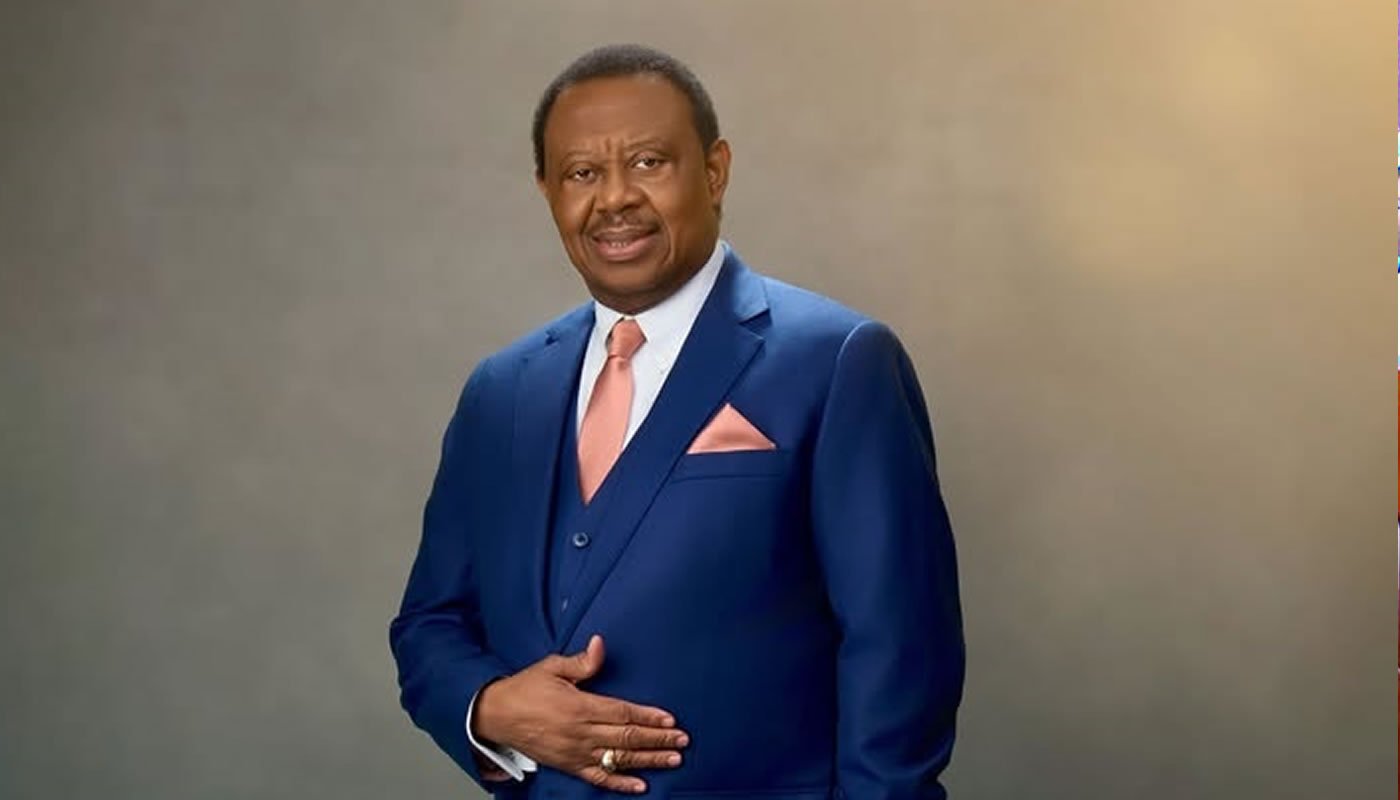

By Dr. Diamantino Pedro Azevedo
In eight days from today, OPEC will mark its 61st birthday. On the 14th of September 1960, in the Al-Shaab Hall in Baghdad, the five visionary founders of our Organization brought OPEC into being.
Over the subsequent decades, many words have been used to describe the significance of our Organization’s founding and the role OPEC has played in the history of the energy sector and international relations. However, above all, what our Founder Fathers did in Baghdad was make a solemn pledge.
This solemn pledge is at the heart of our Organization; its Statute; its subsequent Declarations and all of its activities.
This solemn pledge is that in confronting the challenges that our countries face:
We will work together.
We will work as one.
We will open the hand of friendship to any like-minded stakeholder who seeks to work in the common interests of oil producers, consumers and towards the good health of the global economy.
The challenges of 1960 are not carbon copies of those we face today. However, the convening of this Ministerial Roundtable on Energy, Climate and Sustainable Development, as well as the agenda we have before us and the line-up of illustrious speakers that we have; all evidence an indisputable fact:
The spirit of Baghdad is alive and well. The values this Organization is founded on are as relevant as ever. The hope generated by a small group of developing nations pledging to work together in 1960 has evolved into one of the most vibrant and consequential developments in the global energy industry: the ‘Charter of Cooperation.’
For making today’s historic meeting possible, I would like to thank and congratulate, the OPEC Secretariat, ably led by HE Mohammad Sanusi Barkindo, a veteran of and specialist in international climate change negotiations.
We convene to discuss one of the greatest challenges facing humanity: the complex interrelationship between energy, environment and sustainable development. This is particularly timely given that the second part of the 52nd session of the UNFCCC Subsidiary Bodies — the SBI and SBSTA —and the 26th meeting of the Conference of Parties (COP26) will take place from 31 October to 12 November in Glasgow under the Presidency of the United Kingdom.
The British have indicated their intention to focus their COP Presidency on four main points. These are:
Mitigation: the COP Presidency is urging parties to enhance their mitigation ambitions, with a disposition to ‘net-zero’ emissions.
Adaptation: the Presidency has called on Parties to collaborate in order to support countries affected by climate change.
Climate finance: there has been a commitment to mobilize at least $100bn a year, along with the need to scale up climate finance, with UNFCCC Parties agreeing on a new collective quantitative goal for financial support.
Collaboration and dialogue: these are crucial to addressing the global challenge of climate change in pursuit of sustainable development objectives and efforts to eradicate poverty, including energy poverty, in light of national circumstances and capabilities.
COP 26 is being viewed as a key step in the operationalization of the Paris Agreement. Parties are expected to enhance their nationally determined contributions and achieve the long-term temperature target of the Paris Agreement. This could lead to transformative changes in the energy sector, and in particular for oil demand.
Important decisions are likely to be made in Glasgow that is vital to our economies and we must not only be fully aware of the issues, but grasp this opportunity to ensure our interests are included and seek fair and balanced treatment.
There are many ongoing dialogues that will have an impact on COP26, particularly at the level of the G7 and G20.
There will be high-level meetings on SDG 7 on energy, including the High-level Dialogue on Energy to be held during the 76th UN General Assembly this month.
Discussions will focus on the transformation of energy systems, particularly promoting renewable energies and reducing the share of fossil fuels in the global energy mix. The preparatory meeting in June focussed heavily on linking SDG 7 on energy with reaching ‘net-zero’ emissions by 2050.
We ask that the countries at the High-Level Dialogue on Energy and COP26 consider all sources of energy without discrimination, along with all available technologies, including the Circular Carbon Economy (CCE) platform and carbon capture, utilization and storage (CCUS) technologies to attain SDG7 and emissions reductions.
Indeed many of our Member Countries have been very active in recently providing clear and viable solutions to address climate change. To that end, I want to give special praise to OPEC Member Saudi Arabia, which has promoted the CCE platform, including its four Rs — reduce, reuse, recycle and remove — a concept that has captured the attention of the world and received sound endorsement by the G20 countries.
In addition, the Kingdom announced the ‘Saudi Green Initiative’ and ‘Middle East Green Initiative’ in March of this year. Both are set to serve as platforms for promoting cooperation and encouraging innovative and sustainable solutions to climate change, thus representing a valuable contribution to global efforts.
Many of our other members are involved in CCUS projects, and are global leaders in efforts to eradicate energy poverty. Initiatives by our Member Countries were discussed at the 4th Technical Workshop on Climate Change, which took place on July 7 and the 19th Coordination Meeting on Climate Change on July 8. Among the key takeaways from these events was the need for inclusive, pragmatic and holistic approaches to mitigate and adapt to climate change, taking into account national circumstances and priorities, as well as the principles of equity and common-but-differentiated responsibilities and respective capabilities.
My country, Angola, is currently serving a three-year term as a Member of the United Nations Economic and Social Council (ECOSOC). As the UN’s High-level Political Forum on Sustainable Development (HLPF) takes place under the auspices of ECOSOC, our own commitment to the fulfillment of the Sustainable Development Agenda comes with added responsibility. In July, we presented our Voluntary National Report (VNR) on the implementation of the 2030 Agenda for Sustainable Development for the first time.
As a developing country, we are acutely conscious of the impact of climate change, particularly in our southern and coastal regions. That said, as OPEC has repeatedly stated, the oil and gas industry must be part of the solution to the climate challenge and we recognise the role it can play in helping achieve all of the SDG’s, particularly SDG 7.
One glaring example of this is in the area of food security, which has been severely impacted by COVID-19. According to a report by several UN agencies, the number of undernourished people globally rose to around 768 million last year – equivalent to 10% of the world’s population and an increase of around 118 million versus 2019. It had remained practically unchanged in the five years previous to that. SDG 2, the goal of zero hunger by 2030, has greatly been imperiled by the pandemic.
Our industry plays a vital role in contributing to food security through the transportation of food and sustainable agricultural mechanization. It is an important factor and one that should not be left out of discussions on the future of our industry.
We meet on the eve of OPEC’s 61st birthday to adapt the wisdom of our forefathers in confronting the challenges of today. Angola wholeheartedly supports this process. We are proud of our membership in this Organization and the crucial role it can play in unlocking a sustainable future for the coming generations.
.Being Opening remarks by HE Dr. Diamantino Pedro Azevedo, Angola’s Minister of Mineral Resources and Petroleum and President of the OPEC Conference, at the Ministerial Roundtable on Energy, Climate and Sustainable Development, 6 September 2021, via videoconference.